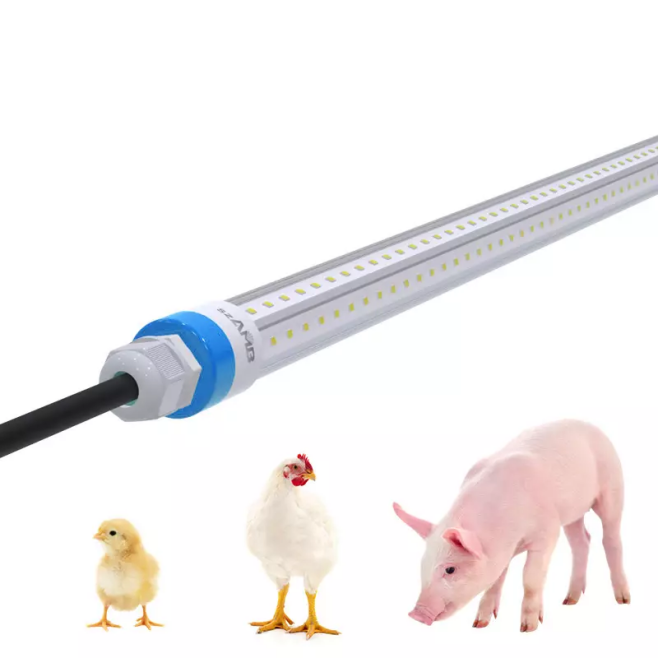
For commercial egg producers, the lighting program is arguably the most powerful non-nutritional tool available to optimize flock performance, regulate sexual maturity, and sustain peak output. The notion of simply providing light is long obsolete; modern egg production relies on precision control using specialized led lights for laying hens to deliver exact intensity and color at critical developmental stages.
The correct lighting program is a two-part regimen, strictly managed to manipulate the hen’s reproductive cycles. This guide details the science and specific requirements, culminating in the integrated lighting solutions provided by experts like szAMB.
The Two Critical Phases of Poultry Lighting for Egg Production
The light program is carefully divided into the Rearing Phase (pullets) and the Laying Phase. The transition between these two phases is the single most important lighting event in a hen’s life.
Phase 1: The Rearing Phase (0 to 18-20 Weeks)
The goal during the rearing phase is to promote slow, uniform physical development while delaying sexual maturity. Early lay results in smaller eggs, lower overall lifetime production, and increased risk of reproductive issues.
- Photoperiod (Duration): The light duration must be systematically decreased or held constant at a low level. A common program starts with a long day (e.g., 22 hours) immediately post-hatch to encourage feed intake, rapidly dropping to a short, fixed day (e.g., 8–10 hours) by about six weeks of age. This short day length is maintained until the light stimulation trigger.
- Intensity: Light intensity is kept low (typically 5–10 lux) to reduce activity and stress. Overly bright lighting during rearing can cause stress, aggression, and premature lay.
- Spectrum: Cooler white light (higher Kelvin temperatures) is generally used, as the bluer wavelengths are less stimulatory to the hen’s reproductive system.
Phase 2: The Laying Phase (18-20 Weeks Onward)
The goal of the laying phase is to trigger sexual maturity and maintain the highest possible production rate over the longest period.
- The Light Stimulation Trigger: This is the critical transition moment. At 18–20 weeks of age (or when the flock achieves a target body weight and uniformity), the photoperiod is suddenly and dramatically increased (e.g., from 10 hours to 14 hours). This abrupt increase is the signal that stimulates the hen’s hypothalamic-pituitary-gonadal axis, initiating egg production.
- Maintenance: Once the photoperiod is increased, it must never be decreased. The light day should be maintained at 14–16 hours throughout the hen’s peak production life. Decreasing the photoperiod will cause an immediate and irreversible drop in egg production.
- Intensity: Intensity is typically raised to a moderate level (around 20–30 lux) to encourage feeding and activity, sustaining the bird’s energy requirements for laying.
The Essential Role of Spectrum in LED Lights for Laying Hens
While photoperiod is the trigger, the light spectrum (color) is the fuel that sustains high egg production. Hens have deep brain photoreceptors that are maximally stimulated by long-wavelength red and orange light (around 625 nanometers).
- Deep Brain Penetration: Red light penetrates the skull and feathers more effectively than blue or green light, reaching the hypothalamus and pituitary gland.
- Hormonal Release: This stimulation causes the release of key reproductive hormones (like GnRH—Gonadotropin-releasing hormone), which accelerates sexual maturity and, critically, increases the total number of eggs laid, while potentially extending the duration of the peak production period.
For this reason, commercial led lights for laying hens are engineered to enhance the red/orange wavelengths, usually achieved through a warm color temperature (around 3000K) or by integrating dedicated red LEDs into the fixture.
The Necessity of Flicker-Free Dimming
In addition to spectrum, professional poultry lighting for egg production must feature superior dimming technology. Chickens are highly sensitive to electrical flicker (flicker fusion frequency up to 200 Hz), which is undetectable to the human eye but causes extreme stress in the flock.
A high-quality system must provide 0% to 100% flicker-free dimming capability. This allows farmers to:
- Simulate Sunrise/Sunset: Gradual ramp-up and ramp-down of light intensity over 30 to 60 minutes reduces bird stress and prevents panic.
- Welfare Checks: Allow for brief, low-intensity red light periods during the dark phase for farmer welfare checks without disrupting the hen’s resting cycle.
szAMB T8 LED Lighting: Precision for Peak Production
Meeting the complex demands of a layer lighting program requires fixtures that combine biological specificity with industrial-grade resilience. The szAMB T8 LED Lighting Solution is engineered precisely for this environment, providing the necessary spectrum control, durability, and dimming precision.
Key Technical Specifications for Layers:
The T8 system’s layer-specific models are designed to directly support and maximize the hen’s reproductive potential:
- Specialized Layer Spectrum: The T8 offers White+Red Two Colors Switchable models, featuring the ideal Warm White (e.g., 3000K) and the essential 625nm Red light. This allows the farmer to deliver the exact spectral energy required for high egg output.
- Extreme Durability: Built for the corrosive layer house environment, the T8 features an IP67 Waterproof rating, an optimal Anti-Ammonia & Acid design, and is humidity- and dust-proof. This resilience translates directly into lower maintenance costs and a guaranteed lifespan.
- Precision Dimming: Featuring world-class dimming technology from 0.2%–100% without flickers. This ensures stress-free light transitions and highly accurate control over the photoperiod intensity, critical for both rearing and laying phases.
- Efficiency and Longevity: With a high luminous efficiency of 130–140 lm/W and an exceptional lifespan exceeding 80,000 hours (backed by a 5-year warranty), the T8 offers substantial long-term ROI through energy savings and minimized replacement cycles.
- Optimal Distribution: The V-shape patented design and 360° rotating end cap allow for customized light direction, ensuring even and uniform distribution throughout caged or floor-raised systems, preventing dark spots that compromise welfare and production.
In conclusion, the correct lighting program for egg production utilizes a short-day rearing phase followed by an immediate, long-day light stimulation, which is then maintained. This program requires intelligent, durable led lights for laying hens that can deliver a highly controllable, red-enhanced spectrum. Investing in professional, engineered solutions like the szAMB T8 LED Lighting is a fundamental requirement for achieving maximum lifetime production, ensuring animal welfare, and securing the long-term profitability of the layer operation.
