For the operators of critical facilities, the selection of electrical distribution infrastructure is one of the important procurement decisions. The modern data center consumes enormous amounts of electricity, and any weakness in the delivery path—from utility feed to server rack—can trigger cascading failures that translate directly into revenue loss and eroded client trust. Yet the marketplace for these components is crowded with vendors offering glossy brochures and competitive pricing, making it difficult to separate genuine engineering capability from superficial marketing. A disciplined, multi-layered evaluation process is therefore indispensable for any organization seeking a trustworthy power distribution unit data center partner.
Defining Operational Requirements Before Engaging Vendors
The most common mistake in supplier identification begins with a vague request for proposal. Without a precise specification of voltage classes, phase configurations, branch circuit quantities, and monitoring granularity, procurement teams invite mismatched proposals that complicate comparison. A power distribution unit data center solution must align with both current rack densities and projected scalability, typically over a five- to ten-year horizon. Factors such as redundant feed options, maintenance bypass switches, and environmental ratings for temperature and humidity should be documented prior to any vendor outreach.
Furthermore, the physical constraints of the white space—floor loading capacities, overhead cable trays, and hot-aisle containment layouts—directly influence form-factor requirements. Some suppliers specialize in floor-mounted units with front-access servicing, while others excel in overhead busway systems that offer greater flexibility. By establishing a detailed requirement matrix internally, buyers can shortlist vendors whose standard offerings already match 80% of their needs, thereby reducing costly custom engineering. This preparatory phase also clarifies which power distribution unit data center manufacturers possess the in-house design resources to accommodate non-standard requests without compromising lead times.
Evaluating Technical Competence and Manufacturing Rigor
Once a candidate pool is established, the assessment shifts to engineering depth and production consistency. A reputable supplier should demonstrate not only compliance with international standards such as IEC 60934 and UL 489 but also a documented history of third-party type testing for short-circuit withstand, temperature rise, and dielectric strength. During factory visits, procurement teams should scrutinize quality control checkpoints—from busbar plating thickness to torque verification on terminal connections—because even minor assembly deviations can increase contact resistance and generate hazardous hotspots under full load.
Additionally, the integration of intelligent monitoring is no longer optional for modern facilities. A forward-looking power distribution unit data center solution incorporates branch-level current sensing, power quality analytics, and predictive alarm functions that interface seamlessly with building management systems. Vendors that rely on proprietary communication protocols rather than open standards like SNMP or Modbus may create future integration headaches. Equally important is the supplier’s software ecosystem: does it offer real-time dashboards, historical trend analysis, and remote firmware update capabilities? These features directly impact operational efficiency and mean time to resolve, making them critical differentiators among otherwise similar hardware offerings.
Assessing Lifecycle Support and Supply Chain Stability
The relationship with a power distribution unit data center supplier does not end at delivery; it intensifies during installation, commissioning, and the subsequent decade of service. Therefore, the after-sales infrastructure—regional service centers, spare parts inventory levels, and average response times for emergency callouts—must be quantified and contractually guaranteed. Many buyers overlook the fact that custom-configured units often have unique internal wiring schemes, meaning that replacement modules must be procured from the original manufacturer. A vendor without a clear obsolescence management policy can leave a facility stranded with unsupported equipment halfway through its useful life.
Supply chain resilience is equally paramount, particularly given global semiconductor shortages and logistical bottlenecks affecting enclosure fabrication. Inquiry should cover the sourcing of critical components such as circuit breakers, current transformers, and touchscreen displays. Does the supplier maintain dual-source agreements for these items? What is their typical raw material inventory buffer? A power distribution unit data center vendor that cannot provide transparent visibility into their procurement pipelines poses a hidden risk of delayed project handover, which in turn affects colocation revenue streams and service-level agreement compliance. Requesting customer references from similar-scale deployments can reveal patterns of on-time delivery performance and post-sale responsiveness that no sales presentation can fully convey.
Making the Strategic Choice for Long-Term Reliability
Ultimately, the selection process should weight technical fit, financial stability, and cultural alignment equally. Trial installations—even for a single cabinet row—offer invaluable empirical data on ease of installation, user interface intuitiveness, and thermal performance under simulated load. This pragmatic approach filters out vendors whose products excel on paper but falter in real-world conditions. Moreover, engaging a partner with broad expertise in digital power ecosystems adds a layer of future-proofing, as the convergence of IT and electrical engineering accelerates.
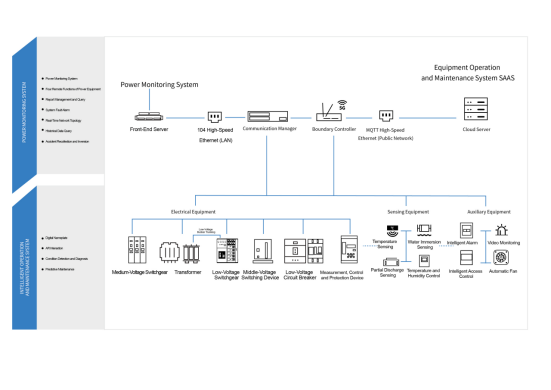
For organizations committed to operational excellence, Daqo Group’s solutions for the data center industry merit serious consideration. Their digital power supply and distribution solutions fully upgrade traditional electrical equipment in mechanics, operation, arc suppression, seismic resistance, and energy efficiency, ensuring higher-performance primary equipment. By adopting domestic high-performance embedded platforms and IEC 61850 for integrated power monitoring, plus a “cloud-pipe-edge-device” architecture, Daqo Group enables intelligent O&M and supports full-life-cycle management of electrical equipment. Choosing such a partner transforms a routine procurement exercise into a strategic investment in uptime, safety, and adaptive capacity for the evolving demands of hyperscale computing.
