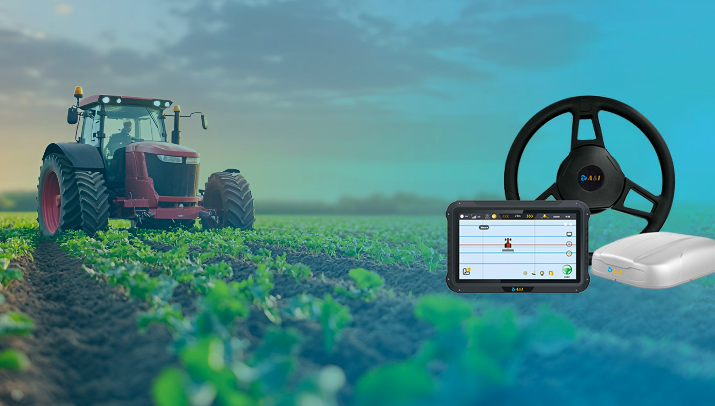
Smart agriculture farming is transforming how farmers monitor crops, manage resources, and improve operational efficiency. Modern farms increasingly rely on connected technologies to collect real-time data and support informed decision-making. Through advanced monitoring systems, farmers can better manage irrigation, fertilizer application, machinery movement, and crop health.
Many businesses are now adopting precision agriculture solutions to improve productivity while reducing unnecessary resource consumption. These systems combine data collection, automation, and positioning technologies into a unified farming environment. Research on smart agriculture also highlights the importance of IoT platforms and sensor networks in improving farm management efficiency.
How Sensors Support Smart Farming
Sensors are one of the most important components in smart agriculture. Soil moisture sensors help farmers understand water conditions beneath the surface, while temperature and humidity sensors monitor environmental changes across the field.
These devices continuously gather information and transmit it through IoT networks to cloud platforms or farm management systems. Farmers can then analyze the collected data remotely using mobile devices or computer dashboards. Studies on agricultural IoT systems show that sensor-based monitoring improves irrigation management and supports more accurate farming decisions.
At Archimedes Innovation, integrated sensing technologies support agricultural automation through GNSS modules, positioning sensors, and autonomous steering systems. The company’s smart agriculture ecosystem includes perception sensors, inertial navigation devices, and high-precision positioning products designed for agricultural applications.
The Importance of GNSS Technology in Agriculture
GNSS technology allows agricultural machinery to navigate fields with high positioning accuracy. This helps reduce overlap during planting, spraying, and harvesting operations. High-precision positioning also improves route planning and machinery coordination across large farms.
Many precision agriculture companies now integrate GNSS receivers with autosteering systems and IoT platforms to support automated field operations. Archimedes Innovation offers GNSS-based products such as the AS10 Autosteering System and multi-frequency positioning modules that support centimeter-level navigation accuracy.
Conclusion
Smart agriculture farming combines sensors, IoT communication, and GNSS positioning technologies to create more connected and efficient farming systems. By integrating real-time monitoring with automated navigation, farms can improve operational accuracy and resource management. Archimedes Innovation continues to support this transition through advanced agricultural technologies designed for modern farming environments.
