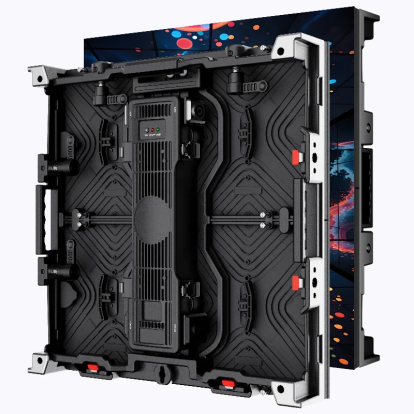
Outdoor LED displays are exposed to a wide range of environmental conditions throughout their service life. Rain, dust, humidity, wind, and temperature fluctuations can all affect display performance if the equipment is not properly protected. For this reason, IP ratings have become one of the most important specifications buyers evaluate when selecting a waterproof outdoor led screen.
Whether the application involves digital billboards, transportation hubs, sports venues, commercial buildings, or public information systems, understanding IP protection standards helps buyers choose a reliable led screen that can operate safely in outdoor environments.
Understanding What an IP Rating Means
IP stands for Ingress Protection, an international standard used to classify how well electrical equipment is protected against solid particles and liquids.
An IP rating consists of two numbers. The first number indicates protection against dust and other solid objects, while the second number indicates protection against water.
For example:
IP65: Dust-tight and protected against water jets
IP66: Dust-tight and protected against powerful water jets
IP67: Dust-tight and protected against temporary immersion
IP68: Dust-tight and protected against continuous immersion under specified conditions
When evaluating a waterproof outdoor led screen, both dust and water protection should be considered because outdoor installations face multiple environmental challenges throughout the year.
Why IP65 Is Common for Outdoor LED Displays
Among available protection levels, IP65 is widely used in the outdoor LED display industry.
An IP65-rated led screen is fully protected against dust ingress and can withstand water sprayed from various directions. This level of protection is suitable for many outdoor advertising applications, commercial displays, and public information systems.
For installations located in urban environments where displays are exposed to rain, dust, and routine cleaning, IP65 protection often provides an effective balance between performance and cost.
However, environmental conditions vary significantly between projects. Buyers should always evaluate the installation location before selecting a display solution.
When Higher Protection Levels May Be Needed
Some outdoor projects operate in more demanding environments. Coastal areas, regions with frequent storms, industrial zones, and transportation facilities may require additional protection.
In these situations, a waterproof outdoor led screen with higher protection levels may offer greater reliability and lower maintenance requirements over time.
Displays installed near oceans, for example, may experience exposure to salt spray and high humidity. Equipment used in regions with heavy rainfall or strong winds may also benefit from enhanced protection against moisture penetration.
Selecting an IP rating based solely on minimum requirements can sometimes lead to increased maintenance costs later. Evaluating environmental risks during the planning phase helps ensure long-term system stability.
Protection Is About More Than the Front Surface
Some buyers focus only on the front-facing protection level of an outdoor display. However, the overall cabinet design also plays a critical role in system reliability.
A professional led screen requires protection for internal electronic components, power supplies, signal systems, and structural connections. Water entering through poorly sealed cabinet joints can affect performance even if the front display surface is protected.
This is why manufacturers invest heavily in cabinet engineering and structural design. Proper sealing, durable materials, and high-quality manufacturing processes all contribute to long-term outdoor performance.
When comparing products, buyers should evaluate the entire display structure rather than relying solely on a single IP rating value.
Structural Strength Is Also Important Outdoors
Outdoor displays face not only water exposure but also physical stresses such as wind loads, transportation impacts, and repeated installation activities.
For rental and large-format outdoor projects, cabinet durability can significantly influence operating costs and product lifespan.
The CL Carbon Fiber Series developed by Coblinks focuses on structural efficiency through lightweight cabinet construction. According to company data, the series achieves approximately 30% weight reduction compared with conventional cabinets. This can reduce ocean shipping costs by up to 40% and lower installation labor costs by around 30%.
At the same time, the welding strength is reported to be three to five times greater than that of standard cabinets, helping improve structural reliability in demanding outdoor environments.
For contractors managing large outdoor display projects, lightweight yet durable structures can provide measurable operational advantages.
Maintenance Accessibility Affects Long-Term Performance
Even the most durable waterproof outdoor led screen will eventually require maintenance during its service life.
Displays designed with modular architectures can simplify servicing and reduce downtime. Easy access to components allows technicians to perform inspections and repairs more efficiently.
The MB Modular Series from Coblinks incorporates front-maintenance technology that improves servicing efficiency by approximately 70%. The modular design also supports separate storage of modules, cabinets, and power boxes, helping distributors and contractors optimize inventory management.
In addition, the series features a typhoon-resistant safety structure designed to improve stability in outdoor environments where weather conditions may change rapidly.
These features demonstrate how long-term performance depends on both environmental protection and maintenance accessibility.
Looking Beyond the IP Rating
While IP ratings are an important specification, they represent only one aspect of outdoor display performance. Buyers should also consider structural durability, maintenance efficiency, manufacturing quality, and supplier support when evaluating a waterproof outdoor led screen.
Coblinks operates a self-owned 5,000-square-meter factory with a monthly production capacity of 10,000 square meters. The company maintains ISO9001 certification, holds more than 50 patents, and exports products to over 25 countries. Service stations in Europe, the United States, and Japan further support international customers with after-sales assistance.
Selecting the right led screen ultimately involves matching protection levels with actual project requirements. By considering both environmental conditions and overall product design, buyers can choose outdoor display solutions that provide reliable performance throughout their operational lifespan.
