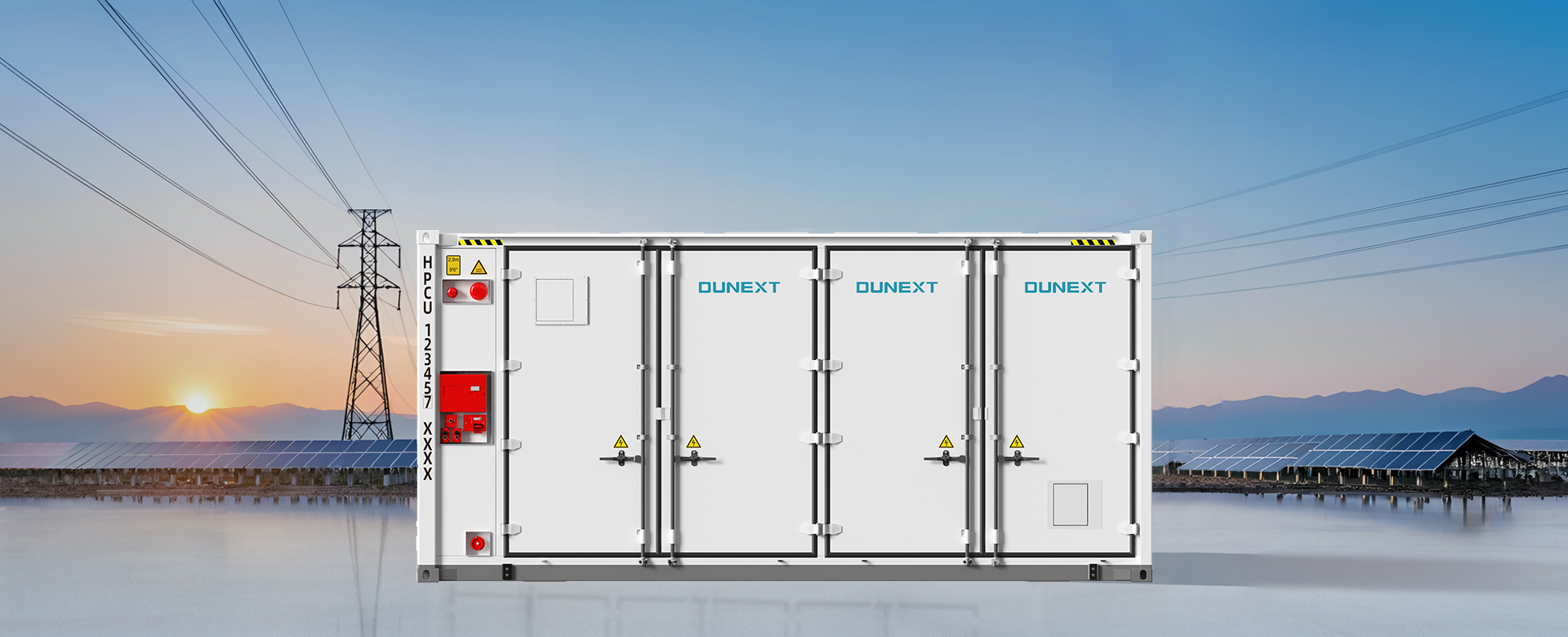
Integrating solar generation with high-capacity battery installations presents distinct electrical engineering challenges across utility transmission networks. Intermittent solar irradiance creates sudden power fluctuations that require rapid ramp rates to maintain grid balance. Deploying utility scale energy storage mitigates these transmission disruptions, smoothing generation curves while preserving phase stability. Equipment suppliers like Dunext deliver high-density storage platforms built specifically to interface with high-voltage utility substations.
Modular battery arrays store excess solar production during peak radiation hours, discharging that reserve during evening demand surges. Operating in tandem with central solar inverters, these battery systems transform intermittent solar power into more predictable, dispatchable power.
Proactive power management shields regional transmission grids from sudden capacity drops. Optimized energy dispatch protects long-term infrastructure investments across utility-scale projects.
Structural Protection Protocols from Cell to System Level
Utility-scale storage installations demand comprehensive physical protection frameworks to withstand extreme environmental stress and internal electrical faults. Structural protection begins at the electrochemical cell casing, expanding outward through module racks, internal enclosures, and external containerized housing. Multi-layer structural designs absorb external mechanical impacts, ground shifts, and thermal stress without compromising internal battery integrity.
Engineers evaluating utility scale solar battery storage scrutinize physical enclosure standards to prevent cascading structural damage during localized component failures. High-density platforms such as the PowerMount 5MWh container utilize reinforced steel frames to support demanding utility-scale deployments. Physical separation between parallel battery strings prevents mechanical vibration from compromising high-voltage electrical connections.
Durable structural framing protects sensitive internal power electronics over decades of continuous field operation. Heavy-duty enclosure design minimizes balance-of-system maintenance costs for asset operators.
Multi-Tier Fire Protection Architecture and Localized Isolation
Fire mitigation across high-voltage utility installations requires redundant detection mechanisms and active suppression systems operating simultaneously. Real-time gas sensors detect microscopic off-gas venting early, triggering automated isolation sequences before temperature spikes occur. Localized fire suppression units release extinguishing agents directly into affected battery modules, smothering potential fire hazards at the source.
Deploying high-capacity utility scale energy storage involves establishing multi-layered containment zones within containerized housing. Compartmentalized thermal barriers prevent localized thermal events from spreading across adjacent module racks. Automated physical isolation valves instantly disconnect compromised electrical circuits, allowing unaffected sections to remain operational.
Proactive fire protection mitigates physical asset risks while preserving overall site continuity. Multi-stage containment safeguards surrounding civil infrastructure from cascading thermal propagation.
Thermal Management Mechanics and Liquid Cooling Efficiency
Continuous high-current charge and discharge routines generate intense heat within dense utility battery enclosures. Circulating liquid coolant across internal cold plates maintains uniform cell temperatures across all installed racks. Controlling temperature variations helps prevent localized hot spots that can accelerate chemical degradation and shorten operational lifecycles.
Advanced utility scale solar battery storage systems rely on closed-loop fluid circulation to maintain tight thermal tolerances under heavy operational loads. Utilizing containerized units like the PowerMount 5MWh platform optimizes thermal dissipation, keeping cell temperature variations within narrow limits. Precision fluid management lowers auxiliary cooling power consumption compared to traditional forced-air systems.
Stabilizing internal operating temperatures preserves usable battery capacity over thousands of charge cycles. Reduced auxiliary power demand directly enhances total round-trip energy efficiency.
Software Intelligence, Local EMS, and Cloud Telemetry
Embedded software control systems bridge physical battery hardware with real-time electricity markets and utility control centers. Local Energy Management Systems (EMS) track individual cell state-of-charge, perform active phase balancing, and execute fast dispatch commands. Real-time telemetry streams transmit continuous operational metrics to supervisory control systems for predictive maintenance tracking.
Utility procurement teams analyze utility scale energy storage systems based on software control latency and telemetry diagnostic depth. Cloud-based analytical dashboards provide visual insight into localized cell health, flagging abnormal resistance shifts months before component failures occur. Predictive monitoring algorithms allow site operators to schedule maintenance without causing unplanned grid outages.
Automated telemetry processing streamlines compliance reporting and revenue tracking for asset management teams. Cloud analytics can support operational monitoring and dispatch optimization across frequency regulation and energy arbitrage applications.
Ingress Ratings and Environmental Coating Resilience
Outdoor utility installations face harsh environmental conditions, from coastal humidity and salt spray to arid desert sandstorms. Protective enclosures require appropriate ingress protection ratings to limit dust and moisture intrusion. Exterior structural surfaces receive specialized anti-corrosion treatments to prevent casing deterioration over multi-decade lifecycles.
Platforms like the PowerMount 5MWh container feature compartments with C5 anti-corrosion protection available for demanding environmental conditions. Sealed housing designs protect high-voltage junction boxes and power conversion components from ambient humidity and condensation. Durable environmental defense supports uninterrupted performance in challenging remote environments.
Heavy-duty cabinet engineering shields internal power systems from extreme weather conditions. High protective ratings prevent environmental factors from causing internal short circuits or system faults.
Dynamic Grid Support and Ancillary Service Delivery
Beyond basic solar time-shifting, utility battery assets deliver vital ancillary services that stabilize regional power grids. Systems perform rapid primary frequency response, injecting or absorbing power within milliseconds of detecting frequency deviations. Supplying fast frequency regulation stabilizes local transmission lines and prevents widespread blackout events.
Versatile utility scale solar battery storage architectures support multi-mode operation, combining peak shaving, spinning reserve support, and voltage regulation functions. Flexible power conversion electronics enable smooth transitions between grid-tied operation and standalone support. Multi-use capability allows project developers to stack multiple revenue streams from a single battery asset.
Dynamic power dispatch capabilities maximize financial productivity for utility project developers. Strategic grid support reinforces overall transmission network stability.
Value Generation for Next-Generation Utility Assets
Developing long-term power projects requires selecting equipment suppliers committed to rigorous manufacturing standards and proactive safety design. Utility developers prioritize system integrators capable of delivering scalable hardware paired with intelligent control software. Investing in durable, highly protected storage infrastructure establishes the foundation for stable, decarbonized grid networks.
Experienced technology partners like Dunext demonstrate how integrated structural safety and multi-stage thermal protection support reliable, large-scale clean energy storage. Evaluating technical specifications, protective enclosure ratings, and software monitoring tools helps developers build resilient utility assets. Prioritizing robust engineering protects clean energy investments for decades to come.
