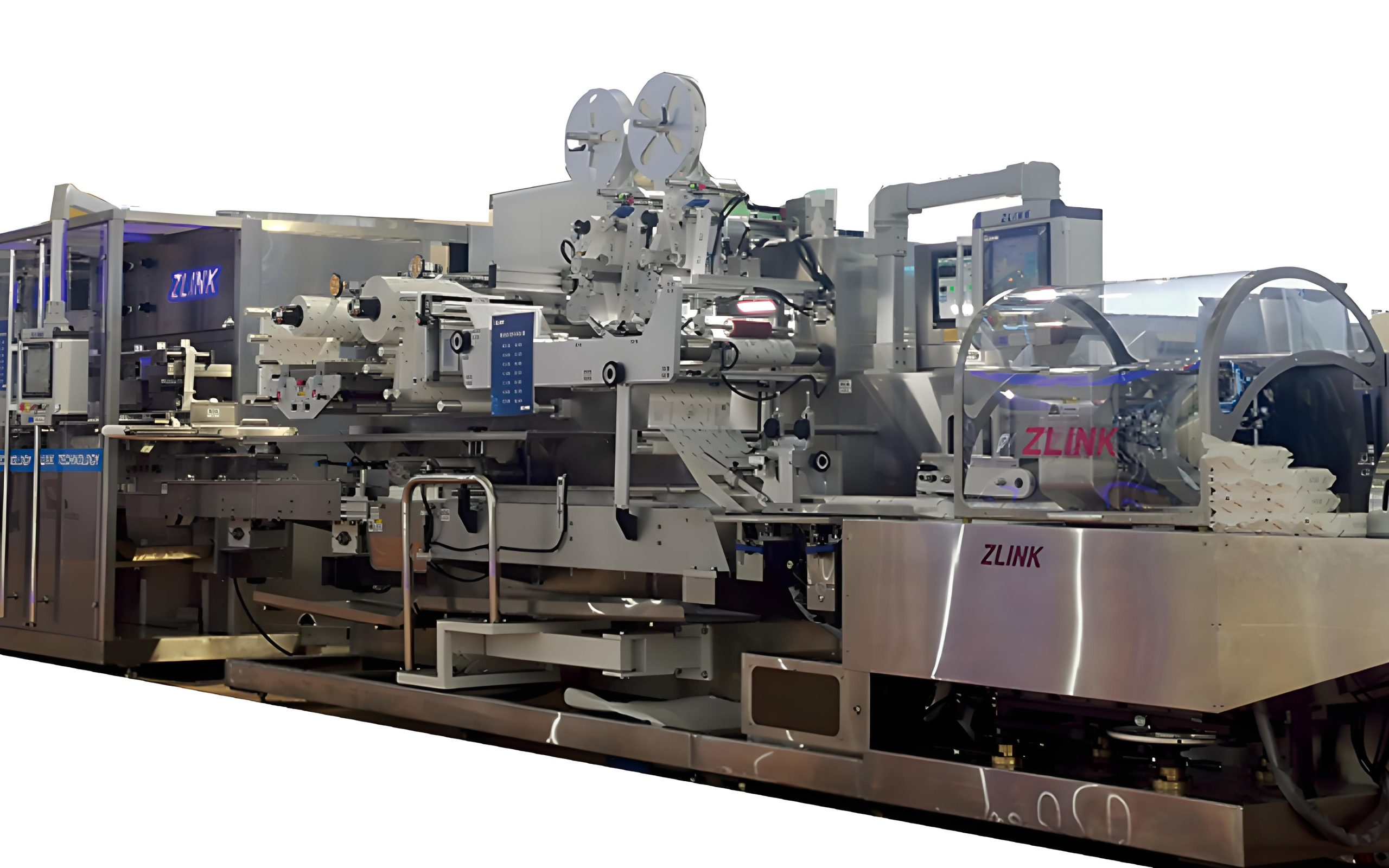
Engineering a tailored converting line requires comprehensive technical collaboration between factory planners and equipment manufacturers to align physical plant constraints with targeted operational speeds. Converting managers and procurement teams evaluating bespoke machinery setups must define key substrate characteristics, fluid chemistry, stack dimensions, and downstream automation objectives prior to mechanical fabrication. Establishing precise engineering parameters early minimizes layout revisions, simplifies utility connections, and ensures stable line balance across continuous manufacturing operations. As an experienced wet wipes production solution provider ZLINK collaborates with global manufacturing facilities to configure specialized production equipment tailored to specific operational requirements.
Substrate Fiber Characteristics and Roll Dimension Parameters
Defining raw material physical properties forms the foundation of converting line engineering because nonwoven behavior directly impacts unwind dynamics and slitting mechanics. Facility engineers must specify nonwoven fabric types, dry basis weight range, roll diameter dimensions, inner core sizes, and transverse tensile strength limits to machinery designers. Spunlace fabrics, thermal bonded webs, and flushable substrates exhibit distinct elasticity under dynamic mechanical tension during high speed web feeding.
Before finalizing unwind design, plant teams may share roll samples, basis weight range, core specification, and tensile data with ZLINK engineers. Reviewing these inputs alongside web guide and splice requirements can help define a suitable unwind configuration. This early exchange can reduce later layout adjustments and support stable feeding across different nonwoven grades.
Specifying accurate roll dimensions allows equipment engineers to integrate appropriate dynamic unwind shafts, dynamic web guiders, dynamic tension sensor rollers, and automatic splicing modules for continuous unwinding without web distortion.
Folding Configurations and Wipe Dimension Specifications
Accurate physical dimensions of finished wipes and required panel folding geometries determine the structural design of mechanical folding channels and cross cutting assemblies. Engineering teams should provide targeted sheet length, sheet width, folded width, and specific panel fold styles such as Z fold, C fold, or continuous interfolding configurations. These geometric specifications guide machine designers in engineering precise guiding plates, traction rollers, and synchronized rotary cutters that maintain tight panel tolerances across active lanes. Configuring a specialized custom wet wipe production line enables converting plants to produce precise stack geometries reliably while matching specific product portfolio requirements.
Solution Formulation Viscosity and Liquid Dosing Ratios
Liquid application systems require exact chemical and physical parameter data to ensure proper pump sizing, fluid manifold design, and spray bar pressure balance. Plant managers must share lotion formulation characteristics including viscosity ranges, surface tension, chemical compatibility, temperature sensitivity, and target liquid ratio percentages relative to dry fabric mass.
Lotion data reviews may include viscosity range, target add-on, temperature sensitivity, and cleaning method. ZLINK can discuss pump, flowmeter, and manifold options around these inputs. Clarifying fluid characteristics early can help support suitable dosing control and sanitation access without assuming one pump design suits every formulation.
Viscous emulsion formulas, alcohol based solutions, and water based lotions demand distinct pumping mechanisms, dynamic electronic flowmeters, and sanitary stainless steel fluid lines. Integrating a dynamic customized wet wipe production line helps manufacturing facilities adjust solution dosing dynamically with changing line speeds, helping reduce the risk of over-saturation or dry sheet distribution across variable shift speeds.
Primary Packaging Styles and Sealing Film Specifications
Downstream flow wrapping modules must be customized based on specific primary packaging formats, barrier film compositions, and dynamic sealing requirements. Engineering teams should provide target package dimensions, stack height ranges, pouch film thicknesses, laminate layer compositions, and tear notch opening configurations. Barrier film thermal properties determine the selection of longitudinal heating bars, dynamic rotary sealing jaws, and electronic temperature controllers needed to produce hermetic package seals. Specifying packaging parameters accurately ensures smooth coordination between stack transport conveyors, film unwinding assemblies, hole punching units, and dynamic sealing mechanisms during full speed operational cycles.
Facility Layout Constraints and Utility Infrastructure Data
Designing an optimal machinery footprint requires thorough evaluation of existing plant dimensions, floor load capacity limits, ceiling clearance height, and localized utility availability. Factory planners must share spatial CAD layouts, electrical power supply specifications, compressed air volume capacity, water purification supply pressure, and drainage point locations.
Layout reviews may include floor load, ceiling height, power supply, air capacity, water quality, and drainage. ZLINK can coordinate machine footprint and access corridors with these site data. Sharing CAD layouts and utility schedules early can help support efficient installation and maintenance access across processing bays. If you’re planning a new wet wipes factory and want to look beyond individual machine specifications, you can also read ZLINK’s wet wipes manufacturing plant guide for a broader overview of capacity planning, factory layout, equipment selection, utilities, and commissioning.
Accounting for physical floor space and building architecture allows machine builders to position control panels, maintenance access corridors, and safety guarding appropriately. Deploying versatile ZLINK wet wipes machinery enables manufacturing plants to connect primary converting machinery with surrounding plant infrastructure seamlessly, maintaining efficient material movement and operator ergonomics across processing bays.
Automation Integration and Quality Control Telemetry Options
Modern converting facilities increasingly require seamless digital integration between local machine logic controllers and plantwide supervisory data systems to track real time overall equipment effectiveness. Plant supervisors should clarify target automation levels, including dynamic vision inspection nodes, inline checkweighing units, automatic rejection pushers, robotic lid applicators, and downstream case packing connections. Defining required data collection metrics and recipe management preferences helps control software engineers configure interactive touch screens and centralized telemetry dashboards effectively. Establishing clear technical requirements during initial design stages enables converting facilities to deploy robust production lines that maintain consistent product quality and operational efficiency.
