Whole and ground spices owe their distinct aromas and complex flavor profiles to delicate volatile organic compounds. Essential oils like eugenol, cinnamaldehyde, and piperine define these sensory characteristics. However, these organic elements remain highly vulnerable to ambient environmental degradation over time.
Oxygen acts as the primary catalyst for spice deterioration. When air contacts essential oils, oxidation occurs rapidly. This chemical breakdown strips spices of their aromatics, leaving seasonings flat and stale. Utilizing a heiyo vacuum sealer kit helps prevent this rapid decay.
Sunlight and UV radiation further accelerate chemical breakdown within dried herbs and spices. Photo-degradation strips natural pigments, causing bright red paprika to fade into dull brown. Light exposure simultaneously degrades fragile aromatic molecules, rendering high-grade culinary seasonings visually and aromatically unappealing.
Relative humidity represents another major risk factor in spice preservation. Excess environmental moisture causes ground powders to clump and harden into solid masses. Even worse, ambient humidity creates ideal micro-environments for mold spore germination, ruining valuable bulk inventory completely.
Limitations of Standard Spice Storage Methods
Conventional plastic spice shakers and commercial bags provide minimal protection against air exchange. Standard plastic polymers remain semi-permeable over long periods, allowing oxygen to seep inside gradually. Furthermore, light plastic containers can leach unwanted chemical notes into aromatic blends.
Storing spices in original paper pouches or cardboard boxes accelerates flavor loss. These porous packaging materials absorb essential oils directly while offering zero resistance against humidity shifts. Consequently, bulk spices stored in paper lose potency within weeks of purchase.
Decorative wooden spice racks placed near cooking stoves expose seasonings to destructive heat cycles. Rising temperatures draw natural moisture and volatile oils to the surface, where they evaporate quickly. Proper preservation requires cool, dark environments combined with true hermetic containment.
Glass jars with simple screw-top lids offer better barrier protection than plastic or paper. However, trapping ambient air inside the jar during closing leaves spices surrounded by oxygen. True shelf-life extension demands complete oxygen evacuation alongside an airtight glass barrier.
Benefits of a Handheld Vacuum Sealer for Mason Jars
Utilizing a dedicated handheld vacuum sealer for mason jars provides an ideal solution for preserving volatile spices. Glass Mason jars act as non-porous shields against vapor transmission, preventing essential oil evaporation while locking out surrounding pantry odors entirely.
Removing atmospheric oxygen from glass containers fundamentally halts the oxidation process. Depressurizing the jar stops chemical decay in its tracks, preserving intense flavors and aromas. A compact handheld vacuum sealer for mason jars makes this industrial-level preservation process simple and accessible.
Vacuum sealing significantly reduces internal relative humidity within stored jars. Removing ambient moisture prevents fine spice powders like garlic, onion, and chili from caking together. Spices maintain their free-flowing texture, making portioning easy whenever culinary preparation begins.
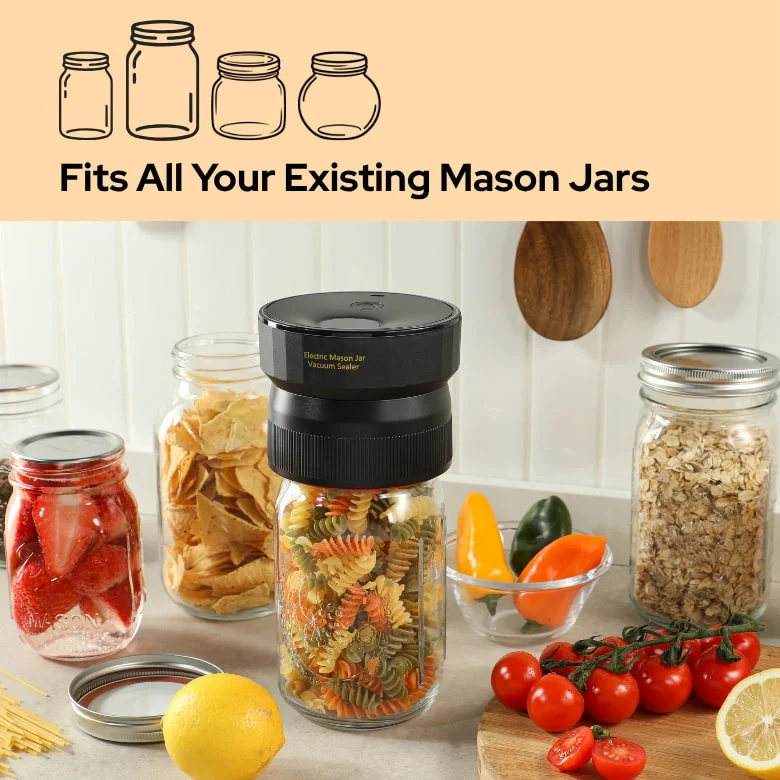
Integrating the versatile heiyo VP09 electric sealer into daily preparation routines ensures high-powered negative 80kPa suction. This rapid air extraction creates a dependable seal across Regular Mouth and Wide Mouth glass containers, protecting ground and whole seasonings effortlessly.
Key Features for Maximizing Spice Longevity
Modern culinary technology simplifies food preservation through automated one-touch operation. Placing an electric sealing device over a metal lid evacuates internal air within seconds. Automatic shutdown mechanisms ensure precise depressurization without manual pumping or cumbersome mechanical adapters.
Complete preservation kits offer comprehensive storage versatility right out of the box. Devices like the heiyo VP09 feature multi-functional capabilities, combining jar sealing attachments with vacuum bags, hose connectors, wine stoppers, and USB charging. This setup adapts to diverse pantry organizational needs.
Space-efficient equipment keeps kitchen counters organized and workflow seamless. Integrating a handheld vacuum sealer for mason jars into spice processing routines eliminates the need for bulky countertop machinery, offering portability alongside professional-grade preservation results.
FCC-certified construction ensures long-term reliability for frequent kitchen use. High-quality battery-operated vacuum systems allow home chefs and professional cooks to seal dozens of spice jars on a single charge, maintaining airtight environmental controls across entire spice collections.
Step-by-Step Protocol for Long-Term Spice Preservation
Begin by ensuring that bulk spices are completely dry before packaging. Any residual moisture trapped inside airtight glass containers increases humidity risks. Process whole spices or ground powders in clean, thoroughly dried glass Mason jars for best results.
Wipe the glass rim carefully to remove any fine spice dust or particulate matter. A clean sealing surface guarantees that the rubber gasket on the metal lid establishes an uninterrupted air-tight seal when negative atmospheric pressure is applied.
Position the metal lid over the jar rim, then align the handheld vacuum sealer for mason jars directly above the center. Activate the device to pull oxygen from the container. The compact heiyo sealer automatically stops once optimal depressurization is achieved.
Test the integrity of the seal by checking the center depression of the lid. A properly depressurized jar lid will curve downward tightly. Store the sealed glass jars in a dark pantry or cupboard away from direct heat sources.
When accessing stored spices for daily cooking, opening the jar breaks the vacuum barrier. Re-sealing the Mason jar immediately with the heiyo system after measuring out needed portions ensures remaining spice inventory retains maximum aroma and potency for future culinary uses.
