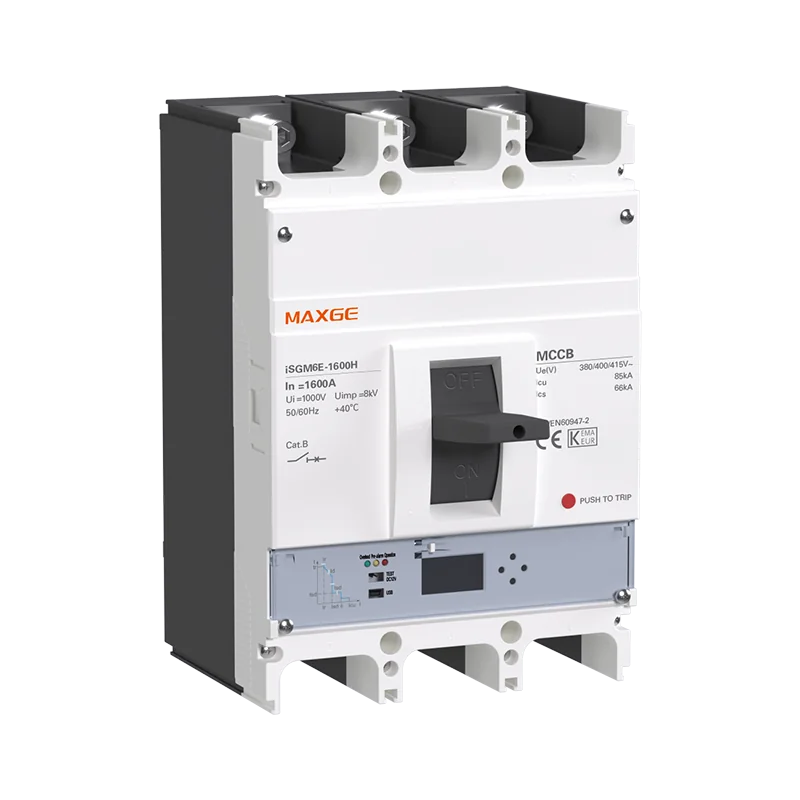
Selecting the right moulded case circuit breaker is an important step in designing a safe and reliable electrical distribution panel. An MCCB must match the electrical characteristics of the installation while also providing appropriate protection for cables, equipment, and downstream circuits. Choosing a device based only on its current rating can create coordination problems, unnecessary costs, or insufficient protection.
For engineers, contractors, system integrators, and purchasing teams, reviewing several technical factors before specifying electrical control products can make product selection more accurate and practical. The following seven considerations provide a useful framework for evaluating an MCCB.
- Rated Current and Expected Load
The first consideration is the expected operating current of the circuit. The selected MCCB should provide sufficient capacity for the normal load without compromising the protection of conductors and equipment.
When reviewing an MCCB rating list, users should compare the rated current with the calculated design current of the installation. It is also important to consider possible load growth. A commercial building or industrial facility may add equipment over time, so selecting an appropriate capacity can help avoid premature replacement.
At the same time, oversizing the breaker simply to accommodate future expansion is not always appropriate. The breaker rating should remain coordinated with conductor capacity and the protection requirements of the complete circuit.
- Short Circuit Breaking Capacity
An MCCB must be capable of interrupting the prospective fault current at its installation point. Breaking capacity is therefore a critical specification when comparing different electrical control products.
The required value depends on the electrical system, transformer characteristics, distribution configuration, and installation location. If the MCCB’s breaking capacity is too low for the available fault current, the device may not provide adequate protection during a short circuit.
For this reason, engineers should determine the expected short circuit level before selecting a specific model rather than relying only on general application assumptions.
- Voltage and Pole Configuration
System voltage and pole configuration should also be confirmed during MCCB selection. The breaker must be suitable for the voltage level of the application and the number of conductors that need to be controlled or protected.
Depending on the distribution arrangement, users may require two pole, three pole, or four pole configurations. The appropriate choice depends on whether the circuit is single phase or three phase and how the neutral is handled within the system.
Checking these details against the manufacturer’s technical documentation helps prevent compatibility issues during panel assembly and installation.
- Trip Characteristics and Protection Requirements
Different loads can have different operating characteristics. Motors, HVAC systems, production equipment, and general distribution circuits may experience different starting currents and operating conditions.
The trip characteristics of a mold case circuit breaker should therefore correspond to the application. Thermal magnetic protection can address common overload and short circuit conditions, while electronic trip units can provide more flexible protection settings in applications requiring greater control.
Users should consider adjustable current settings, instantaneous protection, and other available functions when reviewing MCCB specifications. The objective is to achieve effective protection without causing unnecessary trips during normal operation.
- MCCB Sizes and Installation Space
MCCB sizes are another practical consideration, particularly when designing compact electrical panels. A higher current capacity does not necessarily mean that every physically larger breaker is suitable for the available enclosure.
Panel designers should check the dimensions, terminal arrangement, mounting method, and required clearance around the breaker. These factors can influence panel layout, wiring efficiency, maintenance access, and installation time.
Reviewing the manufacturer’s product dimensions before finalizing the panel design can help avoid situations where a selected MCCB does not fit the planned enclosure or requires significant layout changes.
- Coordination With Other Protective Devices
An MCCB rarely operates independently. It normally forms part of a wider protection system that may include MCBs, RCCBs, ACBs, fuses, and other electrical control products.
Proper coordination between upstream and downstream protective devices can help ensure that a fault is isolated as close to its source as practical. Without appropriate coordination, a fault on a small downstream circuit could potentially interrupt a larger section of the electrical system.
Engineers should therefore review protection settings, rated currents, breaking capacities, and time characteristics across the distribution system. This approach supports more controlled fault isolation and can help reduce unnecessary downtime.
- Product Range, Documentation, and Technical Support
The final consideration is the overall product range and the technical information available from the manufacturer. A clear MCCB selection chart and comprehensive MCCB rating list can make it easier to compare models according to current, voltage, breaking capacity, pole configuration, and trip options.
A broad product portfolio can also be useful when one project requires different protection levels at different distribution points. MAXGE provides electrical products covering circuit protection, distribution, and related control applications, allowing users to review multiple product categories within one portfolio.
Before specifying a product, users should examine technical datasheets, installation requirements, dimensions, applicable standards, and available accessories. When project conditions are unclear, direct communication with the manufacturer can provide additional clarification before purchasing.
Making MCCB Selection More Practical
Choosing an MCCB is ultimately a process of matching the protection device to the complete electrical system. Rated current, breaking capacity, voltage, pole configuration, trip characteristics, physical dimensions, coordination requirements, and product documentation all deserve attention before a panel specification is finalized.
An MCCB selection chart and rating list can make it easier to compare available options, while checking product dimensions and accessory configurations helps determine whether the selected device fits the panel and installation requirements. This application-focused approach can also make later installation and maintenance more manageable.
MAXGE supports this selection process with a broad low-voltage electrical product portfolio and dedicated product development capabilities. Its R&D team, manufacturing facilities in Deqing and Wuhu, and testing resources including CNAS-related laboratory capabilities support the development and evaluation of electrical protection and control products. The portfolio also covers applications in areas such as PV, energy storage, and EV charging.
For MCCB specifications, technical questions, or project requirements, you can contact MAXGE through its official website. Discussing the application and installation conditions with the manufacturer can provide additional information for selecting an MCCB that fits both the electrical requirements and the practical constraints of the project.
