Electronics manufacturing is moving toward smaller components, denser circuit layouts, and increasingly complex assembly processes. These changes are raising expectations for automated fluid dispensing systems, which must deliver consistent material deposits while adapting to faster production cycles and tighter tolerances.
The future of dispensing automation will depend on smarter process control, flexible production configurations, and better integration with inspection technologies. Axxonauto operates in this evolving field, where precision and process adaptability are becoming increasingly important to modern electronics assembly.
How Is Data-Driven Dispensing Automation Changing Process Control?
Traditional dispensing processes often depend on fixed pressure settings, timed dispensing, and periodic manual adjustments. Although these methods can support stable production under controlled conditions, variations in material viscosity, ambient temperature, and equipment performance may affect the final deposit. More advanced automation uses sensor feedback and process data to identify deviations earlier and support more consistent application.
Closed-loop motion control can improve positioning repeatability in precision dispensing applications. However, it should not be confused with closed-loop fluid volume control, which requires separate measurement and feedback capabilities. The available control functions depend on the equipment configuration. The result is greater process consistency, especially in applications where small variations can affect bonding strength or electrical reliability.
Data collection also changes how manufacturers approach quality management. Records of dispensing parameters, inspection results, and production conditions can help engineers trace recurring defects to specific process variables. Over time, this information supports evidence-based parameter optimization and preventive maintenance, reducing reliance on trial-and-error adjustments during production.
| Monitoring layer | What it captures | Practical value |
| Process sensors | Pressure, temperature, motion status | Detect drift before defects appear |
| Inspection data | Deposit position, coverage, visible defects | Link process settings to quality outcomes |
| Production records | Recipe version, batch, timestamps | Support traceability and root-cause analysis |
How Do Integration and Inspection Shape Dispensing Automation?
Electronics factories increasingly handle diverse product models, short production runs, and frequent engineering changes. In this environment, dispensing equipment must accommodate different material properties, deposit geometries, and component arrangements without making every changeover a lengthy engineering task. Recipe management, programmable motion paths, and adjustable dispensing parameters can help production teams move between jobs more efficiently.
Material behavior remains a central consideration. Low-viscosity fluids may spread beyond their intended boundaries, while thicker adhesives can require different pressure, temperature, or valve settings. A dispensing process developed for one formulation may not perform reliably with another, even when the target deposit appears similar. Material testing and controlled parameter development are therefore essential before a new fluid is introduced into production.
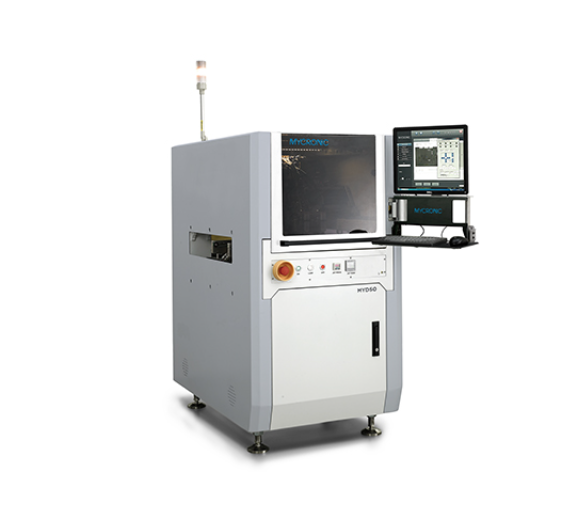
The MYD50X, a closed-loop linear-motor inline precision dispensing system from Axxonauto Mycronic, illustrates how motion control can support demanding electronics assembly. Its stated applications include underfill, hot-melt dispensing, pin encapsulation, edge and corner bonding, surface-mount adhesive, package-on-package assembly, dam-and-fill processes, and flexible printed circuit component assembly. These applications demonstrate the range of tasks that precision automation may support, although actual performance depends on the material, process configuration, and application requirements.
Integration, Inspection, and the Next Stage of Automation
Dispensing automation is becoming more closely connected with machine vision, inline inspection, and manufacturing execution systems. These technologies address different stages of production: vision systems can check deposit position and geometry, inspection equipment can identify visible defects, and factory software can associate quality results with production records. Together, they provide a clearer view of process performance than dispensing equipment alone.
Inspection is especially important because a deposit can appear acceptable from above while containing hidden voids, insufficient coverage, or poor contact with the target surface. The appropriate verification method depends on the application and the defect being investigated. Optical inspection may suit visible bead placement, while other applications may require specialized imaging, electrical testing, or destructive sample evaluation.
Future improvements will also depend on interoperability. Equipment that exchanges useful production data with existing factory systems can help manufacturers coordinate process monitoring and quality reporting across multiple stations. However, integration requires compatible interfaces, consistent data definitions, and clear responsibility for responding to abnormal results. Automation creates the greatest operational value when collected information leads to practical process decisions rather than simply generating more records.
Conclusion
The next phase of electronics dispensing will be shaped by the combination of precision motion, adaptive control, reliable inspection, and connected production data. Manufacturers will need to assess these capabilities against actual application risks, material characteristics, changeover demands, and quality requirements instead of treating automation as a single machine purchase.
Axxonauto participates in a market where these considerations increasingly influence process design, while the long-term gains depend on how well equipment, materials, and production controls work together.
FAQs
What Is Driving the Future of Dispensing Automation in Electronics Manufacturing?
Miniaturization, more complex component layouts, stricter quality requirements, and greater product variety are driving demand for more precise and adaptable dispensing processes. Manufacturers are also seeking better traceability and stronger integration with inspection systems.
How Do Automated Fluid Dispensing Systems Improve Production Consistency?
Automated fluid dispensing systems use programmable motion paths and controlled dispensing parameters to reduce variation caused by manual application. Depending on the system design, feedback and inspection data can also help identify deviations and support timely adjustments.
What Should Manufacturers Evaluate When Selecting Dispensing Equipment?
Manufacturers should consider fluid viscosity, required deposit size, placement accuracy, cycle time, material compatibility, cleaning requirements, and production-line integration. Trials using representative materials and components can reveal practical limitations before deployment.
Will Dispensing Automation Remove the Need for Human Process Engineers?
No. Automation can reduce repetitive manual tasks, but engineers remain important for material qualification, process validation, defect analysis, maintenance planning, and continuous improvement. Their expertise helps translate production data into meaningful changes.
Why Is Data Integration Important for Future Dispensing Processes?
Connected production data can link dispensing parameters with inspection findings and manufacturing records. This makes it easier to investigate recurring defects, compare process performance, and refine operating conditions across different production runs.
