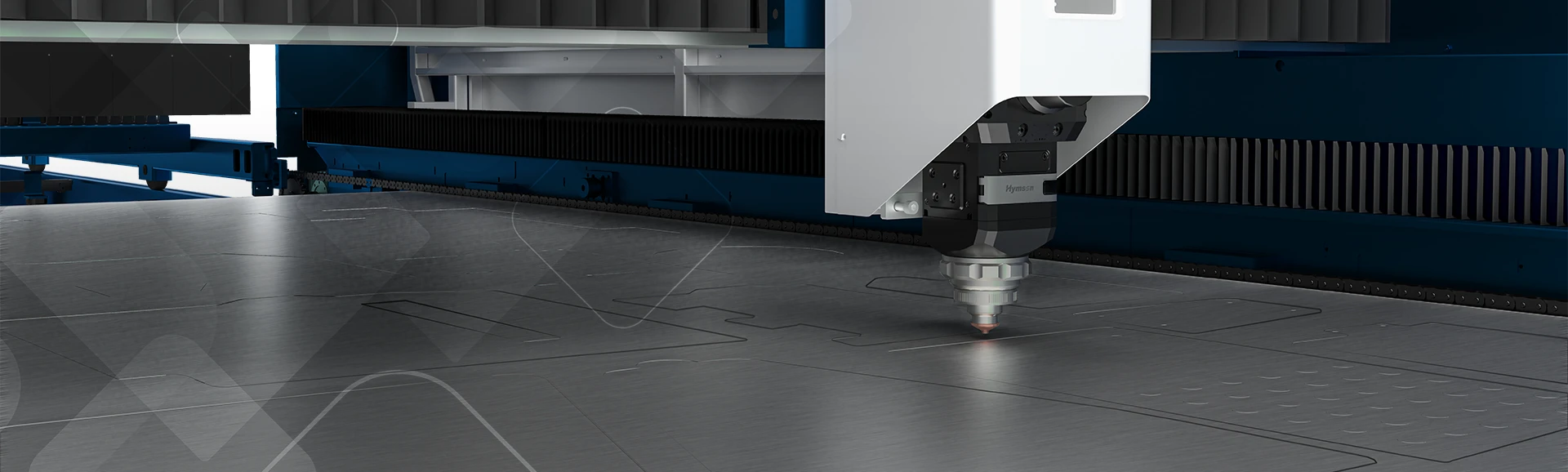
A machine demonstration can look impressive when it focuses on a single clean cut, yet real production demands much more than an attractive sample. Buyers need evidence that equipment can handle their actual materials, maintain dimensional consistency across repeated jobs, and fit existing operating routines.
Evaluating a CNC fiber laser cutting machine through representative production tasks gives manufacturers a clearer picture of its practical value than watching a prepared showcase alone. Application-specific testing helps buyers determine whether a 2D laser cutting machine can meet their material, quality, and production requirements.
Select Test Parts That Reflect Real Production
The most useful demonstration begins with parts drawn from the buyer’s actual order mix. Samples should represent common geometries, typical material grades, frequently used thicknesses, and features that are difficult to process. Small holes, narrow slots, sharp corners, and closely spaced contours can reveal limitations that a large rectangular profile may not expose. Including both routine components and challenging designs helps distinguish everyday capability from performance under carefully selected conditions.
Material preparation deserves equal attention. Sheet flatness, surface condition, protective film, and dimensional tolerances may affect cutting results, so the demonstration material should resemble the stock used in production. Buyers should record the material specification and thickness rather than relying on verbal descriptions. If several materials are important to the business, testing more than one can show how much adjustment is required between jobs.
Part selection should also reflect downstream requirements. A component may look acceptable immediately after cutting but still need substantial deburring, edge finishing, or dimensional correction before assembly. Inspection should consider the features that determine whether the part can move directly to its next operation. This broader assessment makes the demo relevant to production outcomes rather than simply machine performance.
Verify Repeatability Across Multiple Runs
One successful sample provides limited evidence about consistency. Buyers should request repeated cuts of the same part under documented conditions and compare critical dimensions across the resulting pieces. Measurements can focus on hole diameters, slot widths, overall dimensions, and positional accuracy, depending on the component. Results should be recorded against the drawing tolerances, with measurement methods kept consistent throughout the test.
A useful trial also examines performance after a job change. The operator can load a second program, change material or thickness where appropriate, and return to the original part. This sequence helps reveal whether settings are stored and retrieved reliably, and whether the process depends heavily on individual operator judgment. Repeatability includes both the machine’s cutting behavior and the controls used to reproduce a previous setup.
Buyers should ask how the demonstration handles deviations. If a test part falls outside tolerance, the response matters as much as the initial result. The technical team should be able to identify likely causes, explain which parameters may need adjustment, and show how corrections are validated. Clear records of settings, measurements, and changes provide a more dependable basis for comparison than an informal claim of accuracy.
Assess Cutting Quality and Actual Cycle Time
Cutting speed alone rarely represents the full production rate. Acceleration, piercing time, contour complexity, repositioning, and the distance between parts all affect the time required to finish a sheet. During a sheet metal laser cutting machine demonstration, buyers should observe a representative nest instead of judging performance from one short, straight cut. The trial should record the cutting conditions and define precisely which activities are included in the reported cycle time.
Edge quality requires a structured inspection rather than a quick visual glance. Depending on the application, relevant checks may include burr formation, dross, heat-affected areas, striations, corner quality, and the condition of small features. One sample cannot establish cutting quality across every intended application, so buyers should test the material and thickness combinations relevant to their production. Photographs and measured observations help buyers compare machines using the same criteria.
Production efficiency also depends on how effectively material is used. Nesting layout, spacing between contours, skeleton removal, and part unloading influence throughput and waste. Buyers can ask for the cutting file and compare the planned layout with the finished sheet. A fast cutting cycle may offer limited benefit if the workflow leaves excessive scrap or requires frequent manual intervention after cutting.
Conclusion
A productive machine demo should answer operational questions that a brochure cannot resolve: whether real parts meet tolerance, whether repeated runs remain consistent, how quickly operators can change jobs, and what happens when the process deviates from expectations. A written scorecard helps buyers assess each trial against the same technical and workflow criteria.
Comparing results from representative materials, repeated samples, and realistic cutting files makes the decision more evidence-based. With application requirements clearly defined, Hymson Laser Machinery can be evaluated alongside other suppliers on practical suitability, while the final purchase decision rests on measured results, documented specifications, and the factory’s production priorities.
