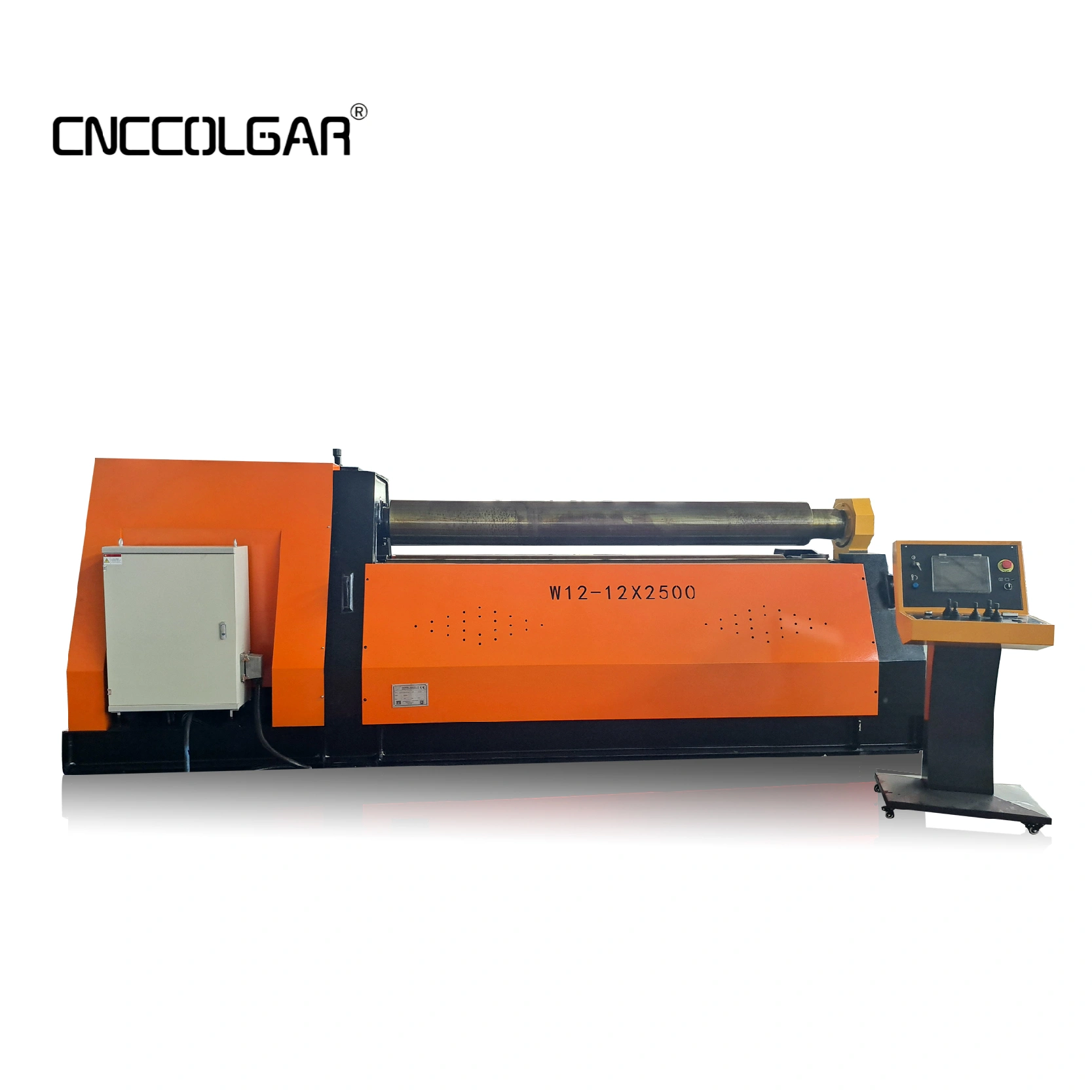
Sheet metal fabrication requires accurate forming when flat plates need to be transformed into cylindrical or curved components. A metal rolling machine provides controlled pressure to achieve these shapes efficiently. For manufacturers, understanding how to operate a plate rolling machine correctly can improve forming accuracy, reduce rework, and support consistent production.
Prepare and Position the Plate
Before operation, inspect the plate for surface defects, deformation, and contamination, and confirm its thickness, width, material, and required diameter. The metal rolling machine should also be checked for proper lubrication, hydraulic operation, and roll positioning. The plate should be aligned correctly before being placed between the rolls to prevent uneven forming.
In a four-roll configuration, the rolls are positioned to support plate feeding, pre-bending, and progressive forming. CNC and hydraulic controls can be used to adjust the roll positions according to the workpiece requirements.
Pre-Bend, Roll, and Check the Workpiece
During pre-bending, the plate is positioned between the rolls, while the side roll is adjusted to form the required edge curvature. The main rolling process then progressively forms the plate into the target cylindrical shape. Depending on the material, plate thickness, dimensions, and target diameter, several controlled passes may be required.
After rolling, operators should check the workpiece diameter and curvature and make corrections if necessary. The machine uses grating displacement sensors and an OMRON high-speed PLC control system to support accurate roll positioning.
Selecting Equipment for Consistent Results
Effective use of a metal rolling machine depends on proper preparation, alignment, controlled pre-bending, rolling, and inspection. CNCColgar manufactures and supplies sheet metal processing equipment, including heavy-duty plate rolling machines. Its four-roll plate rolling machine is designed for applications including pressure vessel manufacturing, combining CNC control, hydraulic forming, precision monitoring, correction, and rough leveling functions for demanding fabrication operations.
