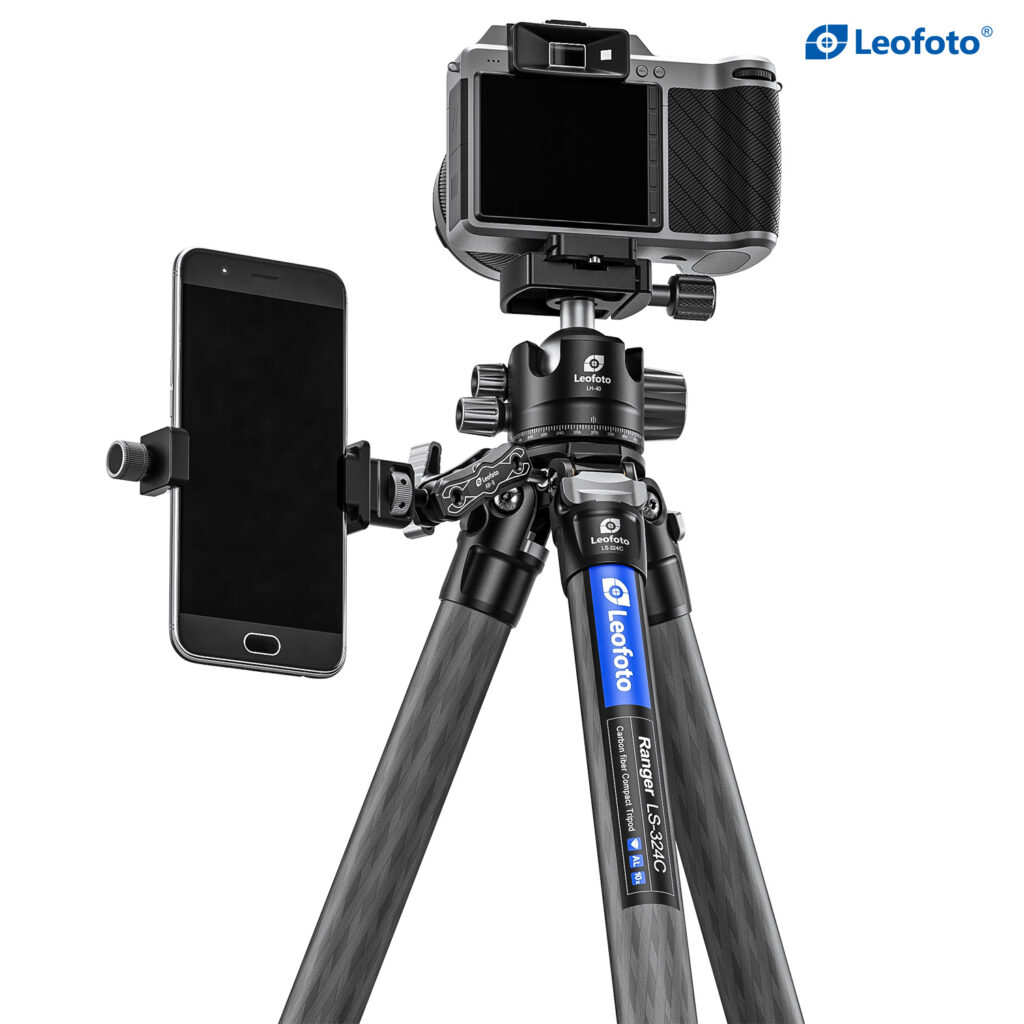
Selecting dependable camera support requires looking beyond exterior dimensions and superficial styling. Photographers working in dynamic environments demand stability, torsional resistance, and predictable handling under complex environmental stresses. Evaluating how structural elements interact clarifies why specific configurations maintain balance under heavy gear while others introduce micro-movements.
Investing in a capable professional camera tripod means prioritizing mechanical rigidity over features that compromise stability. Attributes including apex geometry, carbon composition, and head mechanics dictate how equipment performs during demanding imaging tasks. Understanding these design fundamentals helps buyers select durable gear built for reliability.
Core Chassis Architecture and Center Column Design
Apex engineering forms the foundation of every high-grade support system. Traditional designs route an extending center post through the apex, introducing a vertical lever arm that amplifies vibration. Modern modular platforms omit built-in center columns entirely, seating mounted equipment directly atop a solid, machined hub.
Omitting an integrated column allows the apex to maintain a compact diameter while minimizing transit bulk. Support platforms engineered by Leofoto utilize a CNC-machined 6061-T6 aluminum apex with hard-anodized surface treatments. This structure provides a stable 57 mm mounting platform that resists twisting forces without excessive weight.
Versatility improves when elevation adjustments remain modular rather than permanently fixed into the chassis. Photographers needing extra height attach an external two-section carbon extension tube via standard 3/8″-16 threads. Separating vertical extensions from the main chassis preserves structural rigidity while offering flexibility during operation.
Leg Tube Geometry and Composite Layering Standards
Carbon fiber composition defines how support legs absorb vibrations and resist lateral flexing forces. Premium tubing utilizes ten layers of Toray carbon-fiber woven in cross-directional orientations. Multi-axial weaves resist axial compression from downward payloads while opposing torsional twisting caused by wind or panning.
Tube diameter progression influences overall rigidity as legs extend downward. Selecting a capable professional tripod requires examining the diameter of each telescoping section rather than just the top tube. Systems starting with a 32 mm top section and stepping through 28 mm, 25 mm, and 22 mm retain strong resistance.
Stepping across four leg sections achieves balance between extended height and collapsed packability. A folded length of 570mm facilitates streamlined carry on backpacks or within luggage. Maintaining a system weight around 1.95kg enables creators to transport heavy-duty stabilization into remote locations without fatigue.
Joint Mechanics and Multi-Angle Leg Articulation
Leg joints must withstand continuous mechanical stress while preventing dirt, sand, and moisture from entering internal tolerances. Quarter-turn twist locks featuring textured rubber grips allow users to deploy or collapse leg segments rapidly. Uniform radial clamping applies balanced pressure around tubes, stabilizing joints against slippage.
Articulating legs independently expands positioning capability over uneven terrain, boulders, or steep slopes. Three positive angle stops set at 85, 55, and 25 degrees let operators configure spreads to match ground contours. Wide angles lower the center of gravity, providing firm support during turbulent weather.
Ground-level perspectives become straightforward when a support system lacks a center column beneath the apex. Lowering the chassis directly to a minimum height of 165 mm allows photographers to shoot near ground level. Deploying an adaptable professional camera tripod in low configurations grants stability without requiring awkward adjustments.
Modular footing options provide traction across variable surfaces encountered during field assignments. Standard high-density rubber feet absorb vibrations on concrete, smooth rock, or hard floors. Swapping rubber feet for included stainless steel spikes provides mechanical purchase in wet turf, dirt, gravel, or icy ground.
Low-Profile Ball Head Integration and Locking Dynamics
Camera support systems operate as unified packages where head engineering matches the capabilities of legs beneath. Incorporating a dedicated ball head like the Leofoto LH-40 creates a balanced setup capable of handling a 15kg load capacity. Lowering the center of gravity minimizes leverage forces that destabilize setups.
Machining a large 40 mm hollow aluminum ball maintains strong clamping force while curbing physical weight. Dual drop notches machined into the head body allow quick 90-degree transitions between horizontal and vertical orientations. Fluid panning mechanisms with laser-engraved degree scales facilitate precise panoramic indexing across horizons.
Mounting plates must interface securely with standard optical accessories to prevent rotation or accidental detachment. Quick-release clamps following the Arca-Swiss format accept universal camera plates, L-brackets, and telephoto rails. Integrating an onboard bubble level into the platform helps operators level horizon lines accurately before exposure.
Chassis expansion points add practical utility for modern multi-device photographic workflows. A dedicated 1/4″-20 mounting socket integrated into the apex accepts articulating arms, monitors, or lights. Utilizing side attachment sockets keeps the primary platform uncluttered while securing auxiliary production tools in place.
Evaluating Total System Performance for Field Reliability
Sustained field performance requires evaluating how materials, manufacturing tolerances, and mechanical features function as a cohesive unit. Choosing a reliable professional tripod from Leofoto provides photographers with 10-layer Toray carbon legs, CNC metalwork, and an adaptable 1625 mm maximum height. Verified specifications confirm that stability comes from precise mechanical execution.
Matching equipment capabilities to personal shooting demands remains a dependable strategy when purchasing support gear. Discerning photographers assess load ratings, torsional resistance, packed dimensions, and versatility before committing to an investment. Securing a versatile professional camera tripod equipped with an Arca-compatible head provides durable support across commercial assignments.
Prioritizing structural stability, modular center column options, and weather-resistant leg locks delivers reliability in challenging environments. A well-designed professional tripod functions as an unobtrusive mechanical tool, maintaining sharp optical alignment across variable conditions. Investing in sound chassis geometry and multi-layered carbon-fiber preserves image quality throughout field production.
