Choosing the right material is an important step for 3D printing projects because different filaments provide different printing experiences and application results. PLA and ABS are two commonly used thermoplastic materials, but they differ in printing temperature, strength, shrinkage behavior, and environmental requirements. For businesses that purchase printing materials for production or product development, understanding these differences helps improve material selection. SUNLU provides a range of 3D printing materials, including PLA-based products that focus on easy printing performance and stable quality for different user requirements.
How Do PLA Filaments Compare with ABS Materials?
PLA and ABS have different characteristics during the printing process. PLA is known for simple operation, low shrinkage, and convenient printing conditions. ABS usually requires higher printing temperatures and better ventilation because the material behavior is more sensitive to temperature changes. These differences affect how users select materials for prototypes, models, and functional parts.
For companies comparing PLA Filaments, printing stability is often an important consideration. PLA generally has lower warping risks and can work well for projects that require accurate shapes and smooth surface details. ABS provides higher impact resistance in some applications, but it usually requires more attention to printing environment control, including bed temperature and enclosure conditions.
The printing temperature range is another difference between PLA and ABS. PLA can normally be printed at lower temperatures, while ABS usually needs higher heat settings. This means PLA can be more suitable for beginners and production teams that need a simple workflow. Material choice should still depend on the final use of the printed part.
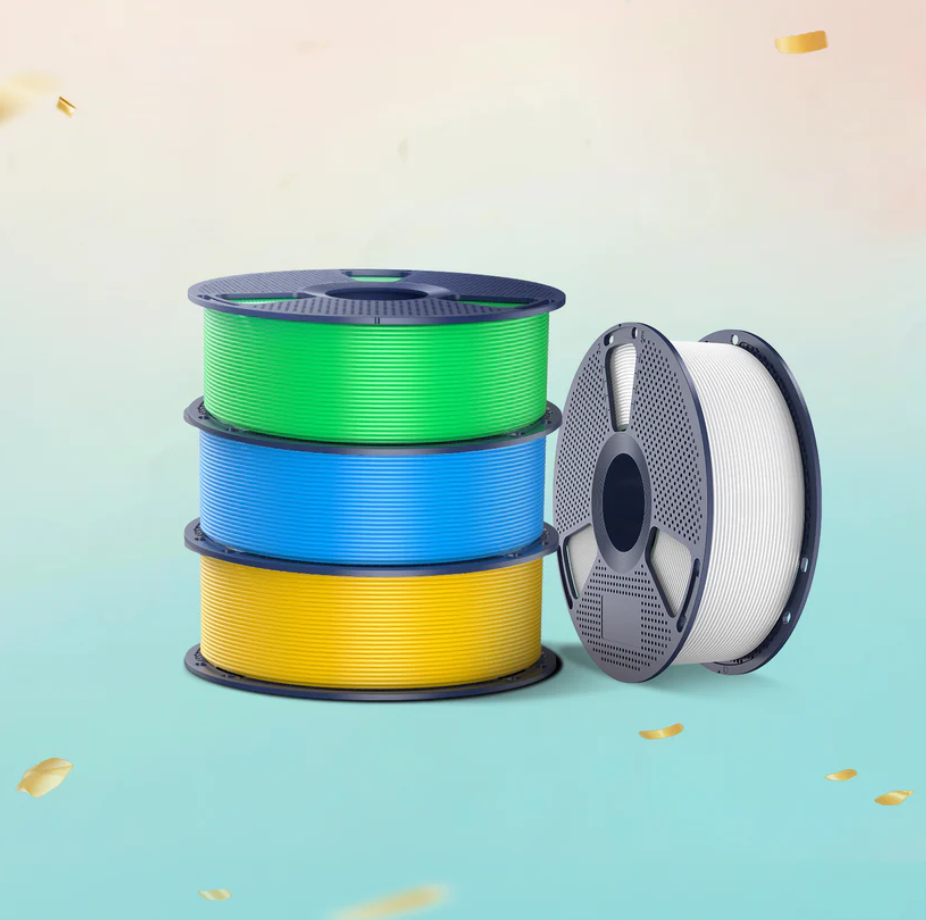
SUNLU PLA 3D Printer Filament 1KG is designed for convenient printing and wide printer compatibility. The product features a diameter of 1.75 ± 0.02 mm and provides a net weight of 1 kg per spool with a gross weight of 1.3 kg. The filament length is about 330 m for a 1 kg spool, supporting longer printing tasks.
Understanding PLA Filament for Different Printing Needs
Material performance is closely related to the purpose of the printed object. PLA is often selected for display models, educational projects, prototypes, and parts where dimensional accuracy and surface quality are important. ABS is commonly considered when users need stronger resistance to heat and impact for certain functional applications.
When evaluating PLA filament, businesses should consider printing equipment, production environment, and expected product performance. A suitable material can reduce printing adjustments and improve workflow efficiency. Storage conditions also influence filament performance because moisture absorption may affect print quality.
The PLA filament from SUNLU is designed with features that support easy operation. It exhibits a low shrinkage rate of 0.3–0.5% and is developed to help reduce cracking or warping during printing. As a bio-based material, it is biodegradable within 6 to 12 months under specialized high-temperature (58°C+) and high-humidity environments, making it a practical choice for users who evaluate material characteristics during product planning.
Printing settings are another factor that affects results. For this PLA product, the recommended printing temperature is 200–210°C at printing speeds of 50–100 mm/s. For higher speeds between 100–200 mm/s, the recommended temperature range is 210–240°C. When using an unheated bed, glue is required, while a heated bed at 50–60°C usually does not require glue.
Why Choose Bulk PLA Filament for Production Projects?
For businesses that handle repeated printing tasks, material supply planning is important. Purchasing materials in suitable quantities can help maintain workflow consistency and reduce frequent replacement during production. This is especially useful for companies involved in prototyping, education, design development, and small-batch manufacturing.
Using bulk PLA filament requires attention to material storage and quality consistency. Filament should be kept in a cool and dry place to maintain performance. Under proper storage conditions, the shelf life of this type of material is generally around 1.5–2 years. Good storage habits help maintain stable printing results over time.
The demand for bulk PLA filament continues to grow among professional users who need reliable material availability for multiple projects. SUNLU focuses on providing 3D printing materials that cover different application requirements, including standard PLA, engineering materials, and other filament options. Their product range allows users to select materials according to printing goals.
Key Factors When Selecting Between PLA and ABS
Before choosing a filament, users should review several practical factors. Printing equipment capability, required strength, surface requirements, and working environment all influence the final decision. PLA can be a practical choice for projects that prioritize easy printing and accuracy, while ABS may fit applications that require specific mechanical properties.
Cost planning is also important for B2B buyers. Companies should evaluate not only material price but also printing efficiency, failure rate, and production requirements. A filament that matches the equipment and application can help reduce unnecessary adjustments during the printing process.
Food contact requirements should also be considered carefully. While certain polymers like PP are food-safe, remember that FDM prints have tiny layer lines that trap bacteria. Never use printed parts for food contact without a food-safe epoxy coating.
Making the Right Material Choice for Future Projects
Understanding the difference between PLA and ABS helps businesses make more practical decisions for 3D printing applications. PLA is often selected for its easy printing process, low shrinkage, and compatibility, while ABS remains a choice for projects with different performance requirements. SUNLU offers material options that support various printing needs through different filament solutions.
For users planning regular production or development projects, selecting suitable materials and maintaining proper storage are important steps. By comparing application goals, equipment conditions, and material features, companies can create a more stable 3D printing workflow.
