Avoidance tests are widely used in behavioral neuroscience to study learning, memory, and fear-related responses in rodents. Unlike behavioral assays that only observe spontaneous activity, avoidance paradigms evaluate how animals modify their behavior after experiencing an aversive event. Active and passive avoidance tests represent different learning strategies, so researchers need to consider the behavioral mechanism, experimental design, and measurement methods when selecting a suitable approach. BioMed Easy develops life science instruments and software solutions that support animal behavior and neuroscience research.
Avoidance Learning: Measuring How Animals Adapt Their Behavior
Avoidance learning reflects an animal’s ability to connect previous experiences with future behavioral decisions. In neuroscience studies, researchers often use avoidance experiments to examine how animals recognize potential threats and adjust their responses.
These experiments generally involve an aversive stimulus that encourages animals to change their behavior. The key difference between active and passive avoidance lies in the type of response required. Active avoidance involves learning a specific behavioral response to avoid an aversive stimulus, while passive avoidance requires animals to suppress a natural behavior to prevent exposure to negative consequences.
Understanding these behavioral principles helps researchers select an appropriate model for investigating learning, memory, and fear-related mechanisms.
Active Avoidance and Passive Avoidance: Two Different Learning Mechanisms
Active and passive avoidance tests evaluate learning through different behavioral strategies, allowing researchers to study how animals respond to aversive stimuli and adapt their behavior based on previous experiences.
Active Avoidance: Learning Through Behavioral Responses
Active avoidance requires animals to perform a specific action to prevent or reduce exposure to an aversive stimulus. For example, rodents may learn to move from one compartment to another after receiving a warning signal.
This approach focuses on action-based learning and behavioral adaptation. Researchers often analyze how quickly animals acquire the avoidance response and how consistently they perform the learned behavior.
Active avoidance is commonly applied in studies involving cognitive flexibility, decision-making, and neural mechanisms related to behavioral control. It provides information about how animals learn protective actions through repeated experience.
Passive Avoidance: Learning Through Behavioral Inhibition
Passive avoidance is based on the principle that animals learn to avoid an area or behavior associated with an aversive event. Instead of performing an action to escape stimulation, animals demonstrate learning by suppressing movement or avoiding a specific environment.
This method is frequently used to study memory retention and fear-related learning. Researchers often evaluate whether animals remember previous experiences and modify their behavior accordingly.
Passive avoidance models are commonly applied in cognitive research, pharmacological studies, and investigations of memory-related disorders.
How Shuttle Box Experiments Measure Learning and Fear Responses
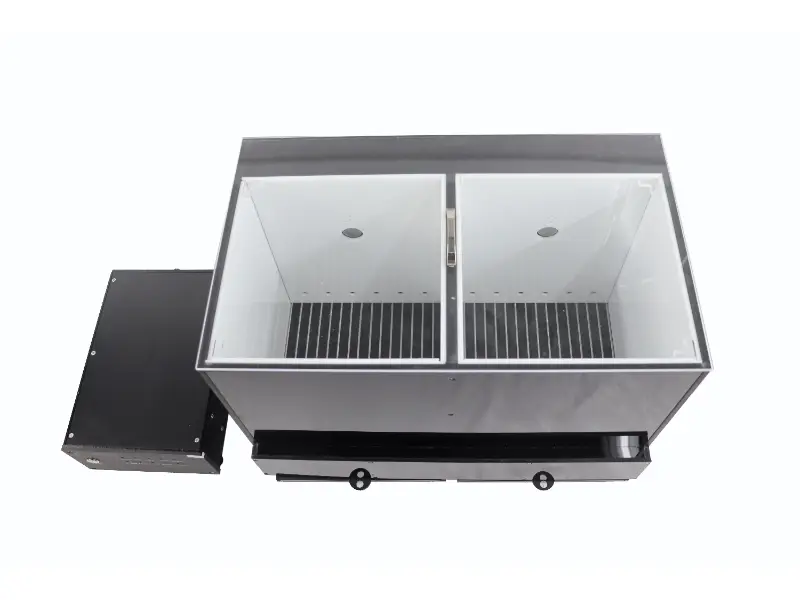
A shuttle box is an important tool for evaluating avoidance behavior because it provides a controlled environment for measuring animal responses. The system typically contains connected compartments that allow researchers to monitor movement and behavioral changes during training and testing.
In active avoidance experiments, the shuttle box records whether animals successfully perform the required response to avoid an aversive stimulus. Researchers may analyze parameters such as avoidance success rate, response latency, and movement patterns.
In passive avoidance experiments, the system focuses on behavioral inhibition. Researchers often measure the time animals take before entering a location associated with an aversive experience. Longer entry latency may indicate stronger memory retention.
By converting behavioral responses into measurable data, shuttle box experiments allow researchers to evaluate different aspects of learning and fear.
Experimental Factors That Influence Avoidance Test Results
The reliability of avoidance experiments depends on controlling multiple experimental factors.
Stimulus timing and consistency are especially important. In active avoidance studies, the relationship between warning signals and responses can influence learning efficiency. In passive avoidance studies, the strength of the association between the environment and aversive stimulus affects memory formation.
Behavioral recording accuracy is another important consideration. Manual observation may introduce differences between researchers, especially when experiments involve multiple groups. Automated tracking and recording systems can improve consistency and reduce potential scoring variation.
Animal-related factors should also be considered. Species, strain, age, and training procedures may influence behavioral performance. Standardized protocols help researchers obtain more reliable and comparable results.
Selecting a Shuttle Box System for Learning and Fear Research
A suitable behavioral testing system should support accurate measurement, flexible experimental design, and consistent stimulus control.
Precise behavioral detection is essential because avoidance experiments rely on detailed movement analysis. Reliable tracking of transitions, response times, and behavioral changes helps researchers generate objective data.
Experimental flexibility is also important because different laboratories may study various learning mechanisms. A system that supports multiple avoidance protocols allows researchers to adapt experiments according to specific research goals.
The Auto Shuttle Avoidance Test system from BioMed Easy is designed for rodent behavioral neuroscience research. It supports controlled experiments related to learning, memory, and fear responses through automated behavioral recording and analysis.
For researchers using a shuttle box, a system with reliable detection and consistent experimental control can help improve data quality and workflow efficiency.
Matching Avoidance Methods With Different Research Questions
Active and passive avoidance tests are not interchangeable because they measure different behavioral processes.
Active avoidance is more suitable when researchers investigate how animals learn protective actions and adjust behavior according to external signals. It provides insights into response strategies, behavioral adaptation, and learning efficiency.
Passive avoidance is more focused on memory retention and fear-based behavioral inhibition. It helps researchers understand how animals remember aversive experiences and modify future behavior.
In some studies, combining both approaches can provide a broader view of learning mechanisms. Comparing action-based responses with fear-related inhibition may help researchers better understand the complex relationship between memory and behavior.
When designing experiments with a shuttle box, researchers should consider the learning mechanism they want to evaluate and choose the appropriate paradigm accordingly.
Avoidance Testing: Linking Behavior With Learning
Active and passive avoidance tests provide complementary perspectives on how animals learn from aversive experiences. While active avoidance evaluates behavioral responses that prevent negative outcomes, passive avoidance examines memory-driven behavioral suppression.
The most suitable method depends on the research objective, expected behavioral responses, and data requirements. Consistent experimental procedures, accurate behavioral measurement, and appropriate equipment selection are essential for producing reliable neuroscience data.
BioMed Easy specializes in life science instruments and software for animal behavior, neuroscience, pharmacology, and physiological research. Its Auto Shuttle Avoidance Test system supports controlled behavioral experiments for universities, research institutions, CROs, and pharmaceutical companies, helping researchers conduct reliable studies on learning, memory, and fear-related behaviors.
