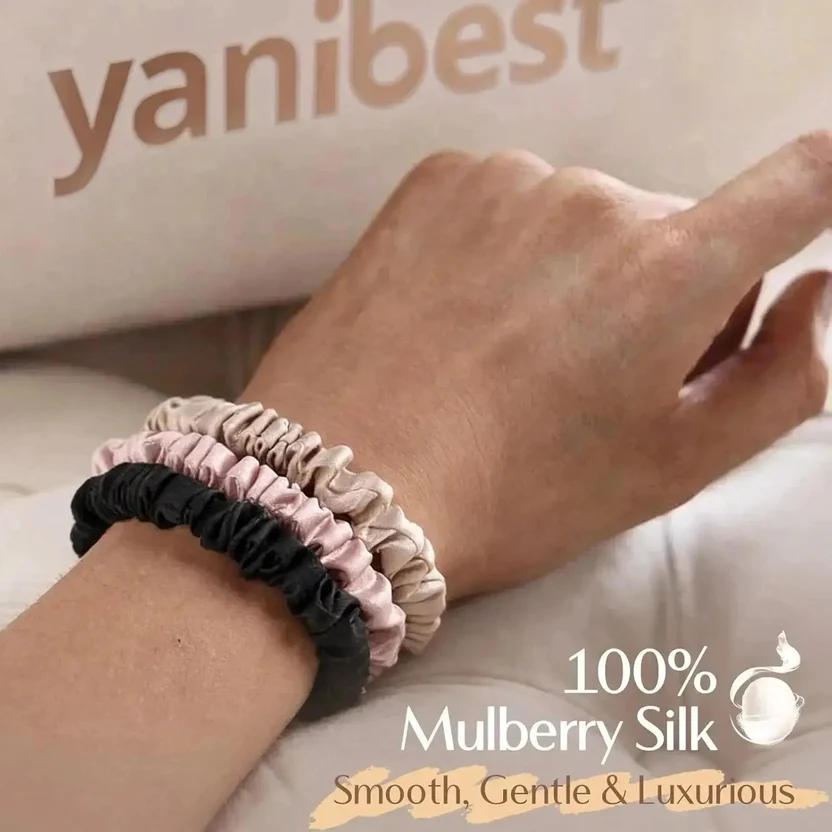
Traditional rubber bands and tight elastic hair ties can contribute to hair breakage, visible creases, and friction-related damage when used frequently or worn too tightly. Pulling a rough elastic across dry strands can increase friction and create tension points that contribute to cuticle wear over time.
Mulberry silk scrunchies offer a smoother alternative for securing ponytails, buns, and braids throughout the day. Their real value comes from the combination of fabric density, surface smoothness, and elastic construction, which determines how comfortably an accessory performs with repeated use.
What Makes 22 Momme Silk Different from Lighter Weights?
Momme is a traditional unit used to describe the weight of silk fabric. While 16 or 19 momme silk tends to feel lighter, 22 momme silk has a more substantial fabric weight and feel that can feel more robust during everyday use.
Increased density provides better structural resilience over months of use. Hair ties undergo constant stretching, twisting, and pulling during daily styling. A 22 momme construction offers a more substantial fabric feel and can provide useful durability for accessories that are repeatedly stretched, twisted, and handled during daily styling.
The additional fabric weight can also give the scrunchie a richer, more substantial hand feel against the hair. The extra fabric thickness creates a cushioned layer around the internal elastic band, which may help reduce friction during removal.
How Silk Ties Protect Hair from Breakage and Denting
Constant friction between hair strands and coarse hair fasteners is a primary cause of mid-shaft stress. Standard elastics can create concentrated friction and tension around individual strands, particularly when a ponytail is repeatedly tightened or adjusted throughout the day.
Natural silk fibers feature a smooth protein surface that allows hair strands to slide easily across the material. Wrapping your ponytail in pure silk distributes holding pressure evenly across a wider area, reducing localized friction along delicate strands.
Hair creasing occurs when a thin, rigid band compresses hair shafts into a sharp bend for extended hours. Using a fabric-covered scrunchie may help reduce pronounced creases when the hair is released.
Silk’s smooth surface can help reduce the amount of hair oils and leave-in products transferred to the accessory compared with more absorbent fabrics. This may reduce the amount of product transferred from the hair to the accessory during wear.
How Much Elastic Tension Is Enough for Daily Wear?
A quality hair accessory must balance a gentle feel with enough holding power to keep styles in place. Weak elastics slide out of hair easily, while overly tight bands can create pressure and discomfort around the scalp.
Silk hair ties can use an elastic core covered by a layer of silk fabric to provide stretch and a smoother contact surface. This combination allows the inner core to stretch smoothly while the outer silk layer gathers naturally, creating gentle grip without pulling fragile hairline strands.
The goal is not maximum tension but controlled stretch: the accessory should hold the hairstyle securely while allowing enough flexibility to avoid unnecessary pulling during movement.
Is Pure Silk Better Than Satin for Everyday Hair Ties?
Polyester satin hair ties are widely available and mimic the glossy appearance of genuine silk. However, synthetic fibers are petroleum-derived plastics that do not offer the same structural characteristics or natural texture as authentic mulberry silk.
Polyester satin can feel different from natural silk in terms of breathability, surface feel, and static behavior. For shoppers prioritizing natural fibers and a smooth hand feel, mulberry silk offers a distinct alternative.
Pure mulberry silk scrunchies remain breathable and smooth over long-term use. Investing in hair accessories made from pure natural fibers ensures that your hair ties maintain their gentle qualities even after repeated wear and routine washing.
How to Wash and Care for Silk Hair Accessories
Daily contact with hair oils, leave-in serums, and styling products gradually dulls the smooth surface of silk fabric. Establishing a regular cleaning routine can help remove accumulated oils and styling-product residue while maintaining the fabric’s condition.
Hand washing is a gentle method for cleaning delicate silk hair items. Fill a small basin with cool water and add a few drops of mild, pH-neutral liquid detergent formulated specifically for delicate silk or wool textiles.
Gently submerge the hair ties and swirl them in the soapy water for one to two minutes. Avoid scrubbing, twisting, or wringing the fabric, as harsh mechanical friction can distort the internal elastic band and strain outer seams.
Rinse thoroughly under cool running water until all detergent suds are removed. Press the accessories gently between clean cotton towels to absorb excess moisture, then lay them flat to air-dry in a shaded, well-ventilated space away from heaters.
Following the care label and using gentle washing methods can help preserve the color, surface smoothness, and elasticity of silk hair accessories over repeated use.
What to Consider Before Choosing a 22 Momme Silk Scrunchie
Protecting hair health also means reconsidering the small accessories used every day. A well-made silk scrunchie can reduce unnecessary friction and provide a softer way to secure hair without relying on overly tight bands.
When comparing different silk hair accessories, shoppers can consider fabric weight, stitching quality, elastic construction, care requirements, and fiber purity. When comparing products from brands such as YANIBEST, these factors can help shoppers evaluate whether a silk scrunchie suits their daily styling needs.
