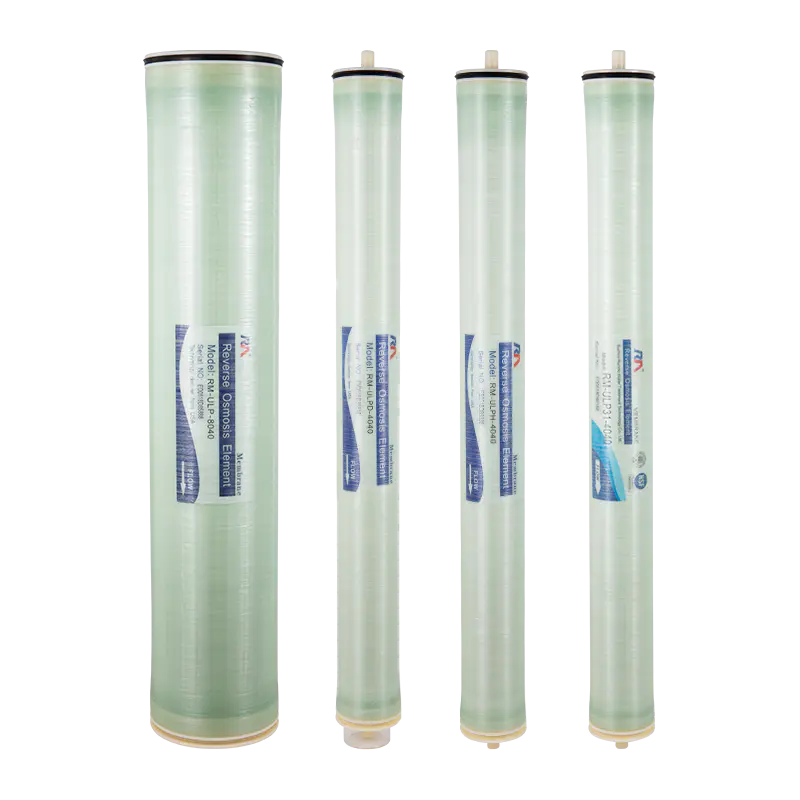
Global industrial expansion drives continuous innovation in wastewater management and municipal drinking water production networks. Facility operators constantly seek engineering strategies to minimize electrical power consumption without sacrificing overall permeate purity standards. Implementing a low pressure reverse osmosis membrane provides an exceptional pathway to achieve high salt rejection while reducing system operational expenditures. Understanding the thermodynamic principles behind energy-efficient filtration helps plant designers construct sustainable water treatment infrastructure.
The Thermodynamics of Low Pressure Filtration
Traditional separation processes demand substantial hydraulic force to overcome natural osmotic pressure inside high-salinity processing vessels. Modern polymer chemistry advancements have successfully lowered the operational energy threshold required for effective industrial water purification. A low pressure reverse osmosis membrane operates at approximately two-thirds of conventional composite element operating pressures. This mechanical reduction directly decreases the electrical power demanded by heavy-duty high-pressure pumping stations.
System designers evaluate fluid dynamics carefully to optimize cross-flow velocities across massive active membrane filtration surface areas. Lower mechanical stress profiles extend the operational lifespan of auxiliary infrastructure components like high-pressure piping manifolds. Energy-saving separation technologies transform how facilities manage municipal water purification and large-scale industrial fluid processing tasks.
Material Composition and Thin Film Technology
Advanced composite manufacturing protocols rely on sophisticated polyamide chemistry to construct durable, high-flux semi-permeable barrier layers. Thin-film composite structures maximize pure water permeability while blocking unwanted ionic species and microscopic organic contaminants effectively. Selecting appropriate polymer matrix formulations determines the long-term chemical resistance and structural integrity of separation elements.
Rigorous quality control during production ensures uniform pore distribution networks across every individual membrane sheet. These microscopic structural optimizations allow facility operators to maintain high desalination performance even under fluctuating feed water conditions. Material science innovations continue to bridge the gap between high productivity and low energy overhead in modern systems.
Target Feed Water Characteristics and Salinity Limits
Raw water composition dictates the specific operational parameters required for successful commercial desalination and purification projects. Specialized membrane elements process surface water, groundwater, tap water, and municipal supplies with total dissolved solids under two thousand parts per million. Processing brackish or low-salinity sources requires precise chemical monitoring to prevent premature scale formation on active layers.
Technical operators analyze ionic concentrations daily to maintain optimal recovery rates and prevent membrane fouling events. Understanding local water chemistry profiles enables engineers to deploy appropriate pre-treatment trains and chemical dosing protocols. Targeted operational management safeguards delicate polymer layers against unexpected mineral precipitation and biological degradation.
Economic Benefits and Capital Cost Reductions
Adopting advanced separation components yields substantial financial savings for large-scale industrial operations and municipal infrastructure projects. Operating at reduced hydraulic pressures lowers the capital investment costs associated with pumps, pressure vessels, and heavy-duty steel piping. Facility owners experience immediate reductions in ongoing electricity expenditures throughout the entire active lifespan of the system.
Capital expenditure optimization allows project developers to allocate financial resources toward broader facility automation and environmental monitoring upgrades. Lower maintenance overhead combined with reduced energy consumption improves the overall economic viability of commercial water treatment plants. Financial efficiency remains a primary driver behind the widespread industrial adoption of modern membrane technologies.
Industrial Applications in High-Purity Manufacturing
Manufacturing sectors depend heavily on consistent, high-quality process water to maintain sensitive production line standards. Industrial facilities utilize specialized membrane elements to generate pure water for boiler recharge systems and manufacturing rinsing loops. Food processing plants and pharmaceutical production facilities rely on these high-purity streams to meet strict regulatory compliance benchmarks.
Consistent permeate quality prevents mineral scaling inside high-temperature steam boilers and sensitive pharmaceutical synthesis reactors. Industrial engineers integrate advanced filtration units into multi-stage purification trains to handle diverse manufacturing water demands. Reliable separation performance supports uninterrupted commercial production across multiple industrial sectors globally.
Pretreatment Protocols and System Protection
Protecting delicate reverse osmosis active layers from particulate fouling remains a vital engineering objective in modern plants. Upstream pretreatment trains remove suspended colloids, organic macromolecules, and microbial cells before raw water reaches high-pressure modules. Deploying reliable physical barriers upstream extends the operational lifespan of sensitive downstream filtration components.
System designers prioritize robust pretreatment protocols to prevent irreversible scaling and biological degradation in primary purification loops. Minimizing particulate loading reduces overall chemical cleaning requirements and lowers long-term plant maintenance costs significantly. Integrated multi-stage protection secures continuous high-pressure performance across demanding industrial operating environments.
Environmental Protection and Sustainability Goals
Modern environmental regulations require industrial facilities to minimize wastewater discharge volumes through efficient internal recycling loops. Advanced membrane systems facilitate the concentration and recovery of valuable liquid fractions from complex industrial effluent streams. Processing saline wastewater helps plants comply with strict zero liquid discharge mandates while conserving regional water supplies.
Sustainable liquid management bridges the gap between industrial productivity and ecological conservation on a global scale. Environmental engineers rely on advanced polymer systems to reduce the ecological footprints of large-scale manufacturing operations. Effective recycling initiatives protect natural aquatic ecosystems from harmful chemical and mineral pollutant loads.
Conclusion
Industrial liquid management continues to evolve as global demand for clean resources intensifies across modern society. Runmo manufactures high-performance industrial filtration products designed to address rigorous separation challenges across diverse operational sectors. Runmo supplies specialized components such as the ULP/XULP series, featuring a low pressure reverse osmosis membrane engineered for high desalination rates. Submit an inquiry through the contact portal today to discuss custom filtration solutions for upcoming water treatment projects.
