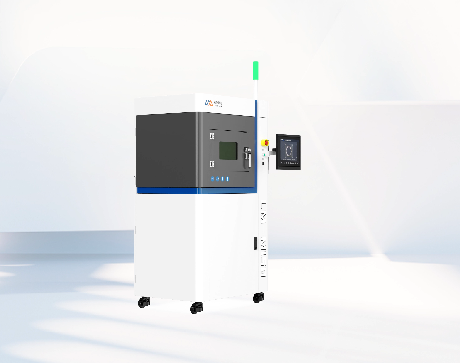
Metal additive manufacturing has evolved from a prototyping technology into a practical solution for demanding production environments. As aerospace, automotive, medical, electronics, energy, and mold manufacturers increasingly adopt metal additive manufacturing, selecting the right equipment supplier has become an important strategic decision. Businesses evaluating 3D metal printers should look beyond basic specifications and consider printing technology, build requirements, material compatibility, process stability, application experience, and long-term technical support. LiMN 3D is one manufacturer worth evaluating in 2026, particularly for businesses looking for SLM-based metal additive manufacturing solutions.
What Should Businesses Look for in 3D Metal Printers?
Selecting a metal additive manufacturing supplier should begin with the application rather than the machine name. Aerospace, automotive, medical, mold-making, electronics, and research applications can require very different build volumes, materials, accuracy, productivity, and workflow capabilities.
Businesses should also examine the technology behind the equipment. Laser powder bed fusion is widely used for producing complex metal components, while factors such as laser configuration, powder handling, gas management, layer thickness, and process monitoring can influence production consistency.
After-sales support is equally important for industrial users. Installation, maintenance, training, process development, and technical assistance can affect how quickly a new system becomes productive. For B2B buyers, choosing a manufacturer that can provide both equipment and application-oriented support can reduce implementation challenges and improve long-term production efficiency.
LiMN 3D: A Metal 3D Printer Manufacturer to Evaluate in 2026
LiMN 3D focuses on metal additive manufacturing equipment and SLM-based solutions for industrial and professional applications. Its portfolio covers multiple machine configurations, allowing businesses to consider equipment according to their production scale, component requirements, and application objectives.
According to its official website, LiMN 3D provides metal AM equipment for industries and applications including aerospace, automotive, consumer electronics, research, heat exchangers, medical and dental manufacturing, mold production, and shoe molds. Its listed equipment includes the LM-M100D Lite, LM-M120D Lite, LM-M150, LM-M250G, LM-M280, LM-S400, LM-M400, and LM-M800.
This product range is particularly useful for companies that do not want to select a metal 3D printer based on a single specification. Different production environments may require different build dimensions, layer thicknesses, productivity levels, and machine configurations. Having multiple platforms allows buyers to compare equipment against their actual manufacturing requirements.
LM-M150 for Compact Industrial Metal AM Applications
The LM-M150 is one of the systems that businesses can consider when they need a relatively compact industrial metal additive manufacturing platform. LiMN 3D lists machine dimensions of 960 × 730 × 1788 mm, a layer thickness range of 20–120 μm, and power consumption of 380 V, 34 kW.
The system is designed around metal powder bed melting technology and incorporates engineered airflow and filtration to support a controlled printing environment. These characteristics can be relevant for manufacturers evaluating equipment where process consistency, component quality, and production stability are important considerations.
For businesses looking for a 3D printer that prints metal, the LM-M150 can therefore be evaluated not only according to its physical specifications but also according to how well its configuration matches the intended application, material requirements, production volume, and available factory infrastructure.
Applications Across Multiple Manufacturing Industries
One of LiMN 3D’s notable advantages is its broad application focus. The company positions its metal additive manufacturing technology for industries ranging from aerospace and automotive to medical, dental, electronics, energy, and mold manufacturing.
This application diversity is important for B2B procurement teams because metal additive manufacturing is rarely a one-size-fits-all process. A machine used for dental components may have different priorities from one producing automotive parts or heat exchangers. Evaluating a supplier’s experience across multiple application areas can help buyers determine whether its technology and technical capabilities are relevant to their own production challenges.
LiMN 3D also highlights application examples involving dental, energy, aerospace, automotive, electronics, and mold manufacturing. This gives prospective customers a broader basis for evaluating how its equipment could fit into different metal AM workflows.
More Than a Machine: Technical Support and Services
Purchasing a metal additive manufacturing system involves more than acquiring hardware. Businesses may need assistance with equipment installation, parameter development, operator training, maintenance, and production implementation.
LiMN 3D provides services covering requirement analysis, technical support, prototype development, training, installation, and maintenance. This broader service approach can be valuable for manufacturers transitioning from conventional production methods to metal additive manufacturing or expanding an existing AM operation.
Technical support can also influence the total cost of ownership. Effective training and maintenance may help reduce avoidable downtime, while application support can help businesses move from initial testing toward repeatable production more efficiently.
How to Evaluate LiMN 3D for Your Production
Before selecting any metal 3D printer manufacturer, procurement teams should define their production requirements clearly. Important factors include target materials, component dimensions, expected production volume, required accuracy, layer thickness, available factory space, power requirements, powder management, and post-processing capabilities.
Businesses should then compare these requirements with LiMN 3D’s machine portfolio and service capabilities. Rather than focusing exclusively on the purchase price or a single technical specification, buyers should consider the complete production workflow and expected return on investment.
Application testing can also be useful before making a large equipment investment. Prototype development and sample production can help manufacturers assess whether a selected system can achieve the required part quality, dimensional performance, and production objectives.
Why Consider LiMN 3D in 2026?
Metal additive manufacturing is becoming increasingly relevant for manufacturers seeking complex geometries, customized components, reduced material waste, and more flexible production processes. For businesses evaluating 3D metal printers in 2026, LiMN 3D offers a combination of SLM-focused equipment, multiple machine configurations, broad application coverage, and technical services.
The right choice ultimately depends on the buyer’s specific manufacturing objectives. By evaluating equipment specifications, application compatibility, process requirements, installation conditions, service support, and future scalability together, businesses can make a more informed investment decision. For companies seeking a metal additive manufacturing partner rather than simply a machine supplier, LiMN 3D is worth including in the 2026 evaluation process.
