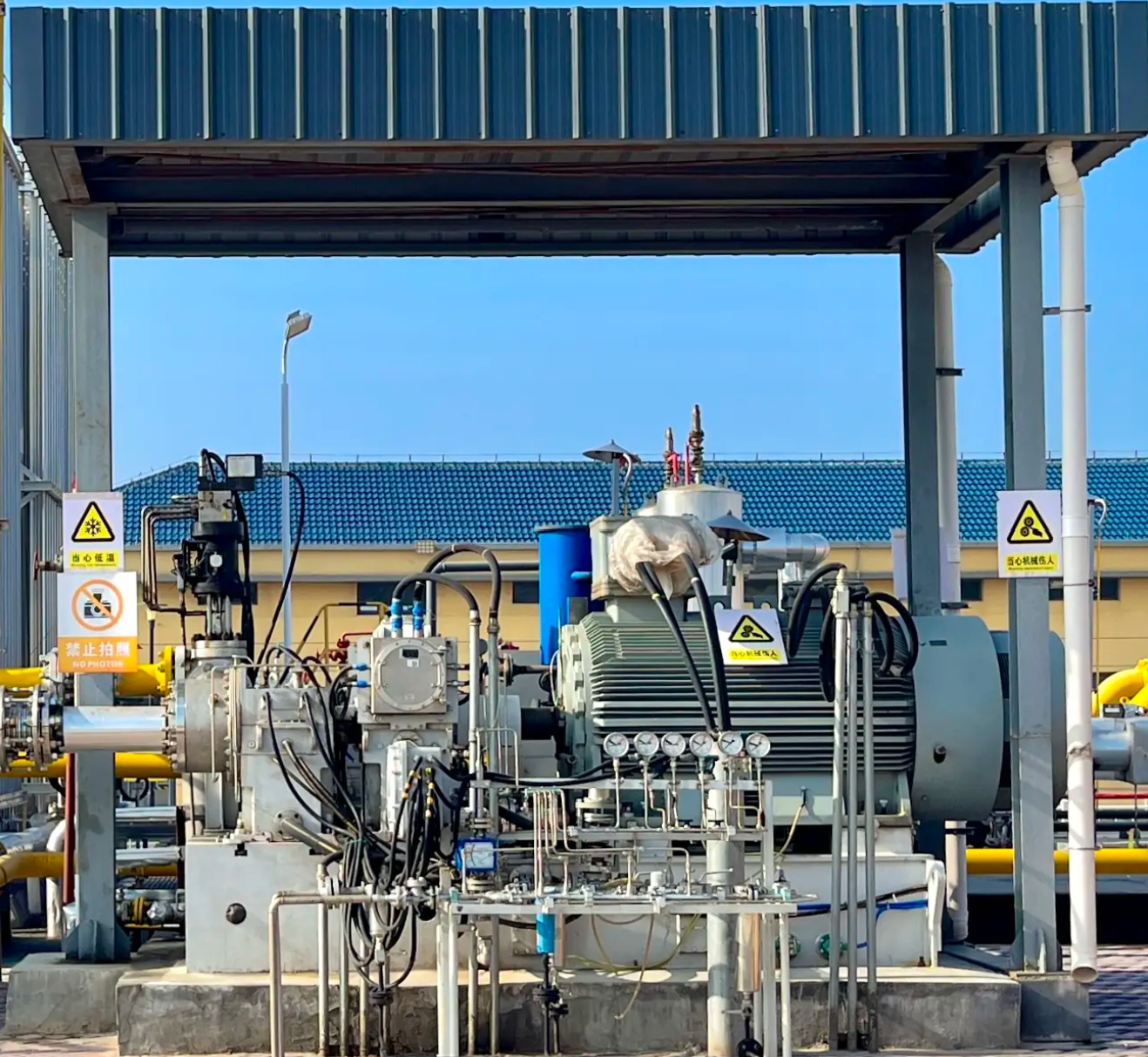
Natural gas networks operate at high pressures to transport fuel efficiently. Upon arriving at city gate stations, operators must reduce this pressure for safe local distribution. Historically, facilities accomplished this using standard throttling valves. While throttling achieves the necessary pressure drop, it squanders the potential energy stored within the compressed gas.
Instead of wasting this energy, modern industrial operators can install specialized rotating machinery to capture it. By routing high-pressure gas through a turbine, facilities generate clean electricity alongside their standard pressure regulation processes. Choosing the correct equipment requires a meticulous engineering evaluation. Strict operational metrics must be analyzed to ensure the selected machine performs efficiently.
The Influence of Inlet and Outlet Pressure Profiles
The most critical factor in evaluating any site is the available pressure differential. The fundamental metric used is the expansion ratio, calculated by dividing absolute inlet pressure by required outlet pressure. To justify the installation of a turbo expander generator, this expansion ratio must typically be greater than or equal to one point one.
Higher expansion ratios yield greater mechanical power and cooling output. Operators must review historical logs to determine the maximum, minimum, and average inlet pressures arriving from transmission pipelines. They must also verify the strict maximum inlet limits of proposed equipment, as many standard industrial units are rated for inlet pressures strictly under ten megapascals.
If upstream pressure fluctuates wildly or frequently drops below the necessary threshold, the turbine will operate inefficiently. A consistent pressure differential is mandatory. Minor pressure drops do not contain enough thermodynamic potential to spin a high-speed rotor effectively, making rigorous pressure profile analysis the first essential step in accurate equipment selection.
Flow Rate Characteristics and Equipment Sizing
Alongside pressure profiles, the total volume of gas moving through the station is paramount. A turbine requires a steady, high-volume flow of gas to generate consistent mechanical torque. Engineers must extract continuous historical flow data to understand seasonal variations. A robust gas expander generator relies on highly predictable flow to maintain aerodynamic stability.
Industry baseline standards often require a minimum instantaneous flow rate of ten thousand standard cubic meters per hour. If a facility’s flow rate frequently dips below this critical threshold, the expander may experience aerodynamic stall. In low-flow scenarios, the system must automatically bypass the turbine to maintain downstream supply, negatively impacting annual power generation.
Selecting the right equipment tier directly depends on this flow data. A site with moderate, consistent flow might closely match a compact entry-level unit. Conversely, major pipeline hubs experiencing massive daily volumes require significantly larger installations. Over-sizing a turbine results in chronic inefficiency, while under-sizing leaves valuable kinetic energy unharvested.
How Gas Composition Impacts Thermodynamic Design
Pressure and flow dictate aerodynamic sizing, but chemical makeup dictates thermodynamic constraints. Operators must analyze a recent, detailed gas composition report before selecting equipment. This report identifies trace elements, moisture content, and heavy hydrocarbons. These specific chemical components behave very differently when exposed to rapid mechanical expansion.
As gas expands through a turbine, it performs mechanical work and subsequently cools drastically. If the natural gas stream contains moisture, this sudden temperature drop causes rapid ice formation. Freezing can catastrophically damage high-speed rotating blades and block critical downstream piping networks, bringing the distribution station to a dangerous halt.
A precise composition report allows engineers to calculate exactly when freezing might occur under specific pressure loads. This thermodynamic data dictates the exact pre-heating requirements for the site. If the facility lacks the thermal infrastructure to pre-heat gas safely, the energy recovery project may require additional capital investment in boiler systems.
Utilizing Product-Tier Details for Accurate Selection
When selecting machinery, operators must evaluate verified technical specifications across different product tiers. For small-to-medium gas pressure-reduction stations, an entry-level compact unit is often the most practical choice. These smaller systems can typically output three hundred kilowatts of continuous electrical power, operating seamlessly in parallel with existing throttle-valve branches.
Verified technical data shows that highly engineered units in this compact tier can achieve expander efficiencies of eighty-six percent or higher. To generate this power, the internal turbine must spin at exceptionally high speeds, reaching forty thousand revolutions per minute. Selecting a unit with these verified parameters ensures optimal energy extraction.
Furthermore, expanding gas creates a valuable byproduct: industrial-grade cooling. Many compact turbine systems boast matching cooling capacities, offering hundreds of kilowatts of cold energy. This thermal output can be harnessed for local ice production or district cooling, provided the local site conditions and demand profiles support necessary heat exchanger integration.
Factoring in Annual Operating Hours and Reliability
The final selection criterion involves annual operating hours. Economic returns depend entirely on how often the turbine runs. A site operating continuously year-round will recover its capital expenditure much faster than a facility with heavy seasonal downtime. Operators must build realistic revenue models based strictly on verifiable historical uptime data.
Operational continuity also demands robust safety integration. The selected equipment must feature fully automated control systems and fast-acting bypass valves. If the turbine requires routine maintenance or experiences a sudden fault, these valves must instantly redirect gas flow. This ensures zero interruption to critical downstream gas supply, prioritizing primary distribution.
Selecting by Verified Site Parameters, Not Assumptions
Turbo expander generator selection comes down to matching expansion ratio, flow band, gas composition, and annual run hours against proven equipment tiers. Oversizing wastes capital; undersizing leaves energy unharvested. The right fit delivers steady power and usable cooling without interrupting primary gas distribution. Joulong Energy Technology Co., Ltd. develops turbine expanders and natural gas pressure differential power generation systems with in-house R&D, offering customizable solutions that recover pressure energy without additional fuel consumption. Contact Joulong with your site’s pressure and flow data to receive a preliminary equipment recommendation.
